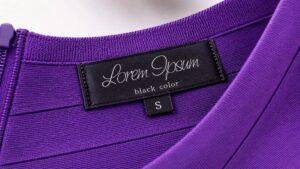
Sourcing a custom color bandage dress sounds straightforward until the bulk shipment arrives and the shade is three steps off your campaign photography.
The sample was approved, the deposit was paid, and the production vat ran without a signed lab dip — that is where signature colors drift.
Understanding the dyeing process before the purchase order is signed is the only reliable way to protect a brand’s color identity across seasons.
A custom color bandage dress requires a dedicated greige-to-shade lot: undyed viscose/nylon/spandex fabric is loaded into a dye machine, matched to a Pantone or physical swatch target through lab dip approval, then run through a full heat curve before finishing.
This is a lot-level commitment, not a color-swap on an existing stock garment.
Request a written lab dip approval record and a dyeing vat cost line item from any supplier before booking the production run.
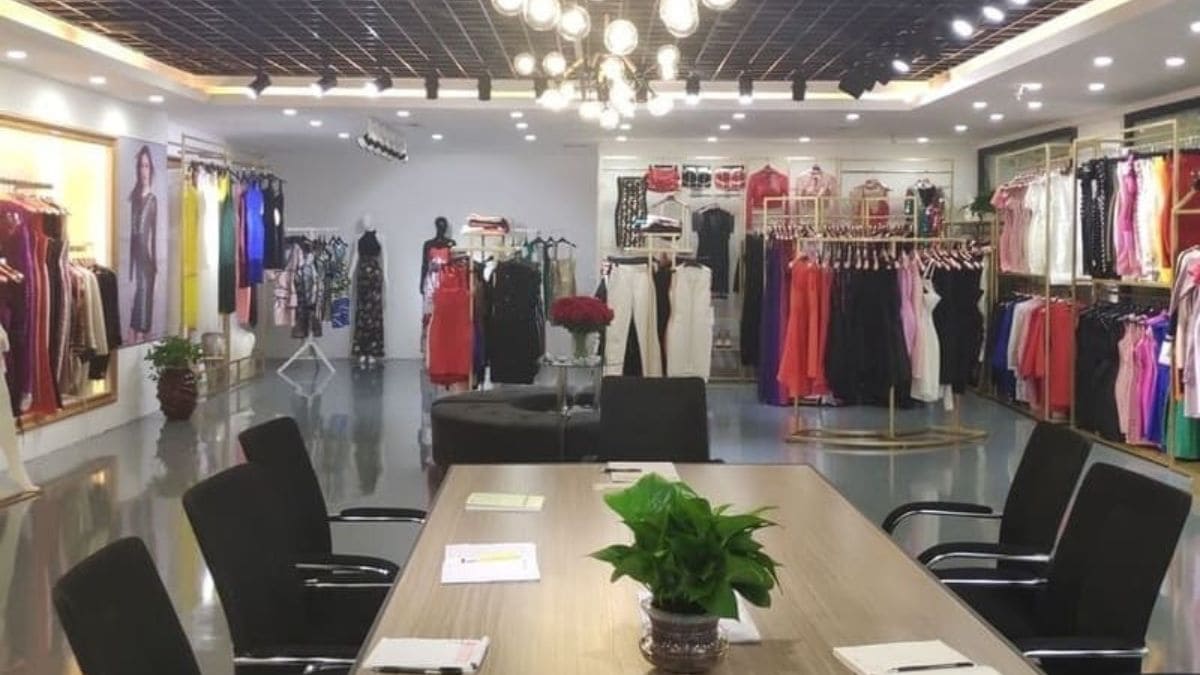
These three elements — the dye-house sequence, the vat cost structure, and the MOQ logic — each carry a direct commercial consequence for a brand placing its first signature-color order.
Buyers who understand all three before signing are the ones who receive consistent color across the first lot and every reorder after it.
What Does Custom Dyeing Mean for a Custom Color Bandage Dress?
Stock colors feel like a safe default until a brand needs the same shade in the third season and the mill has discontinued the lot.
Custom dyeing — starting from undyed greige fabric and targeting one specific brand shade — is the only process that gives a brand repeatable, protected color ownership.
Before examining the dye-house steps, buyers should request a fabric swatch of the exact rayon-rich bandage quality that will go to bulk, not a substitute jersey, and confirm the bandage dress GSM matches the production spec.
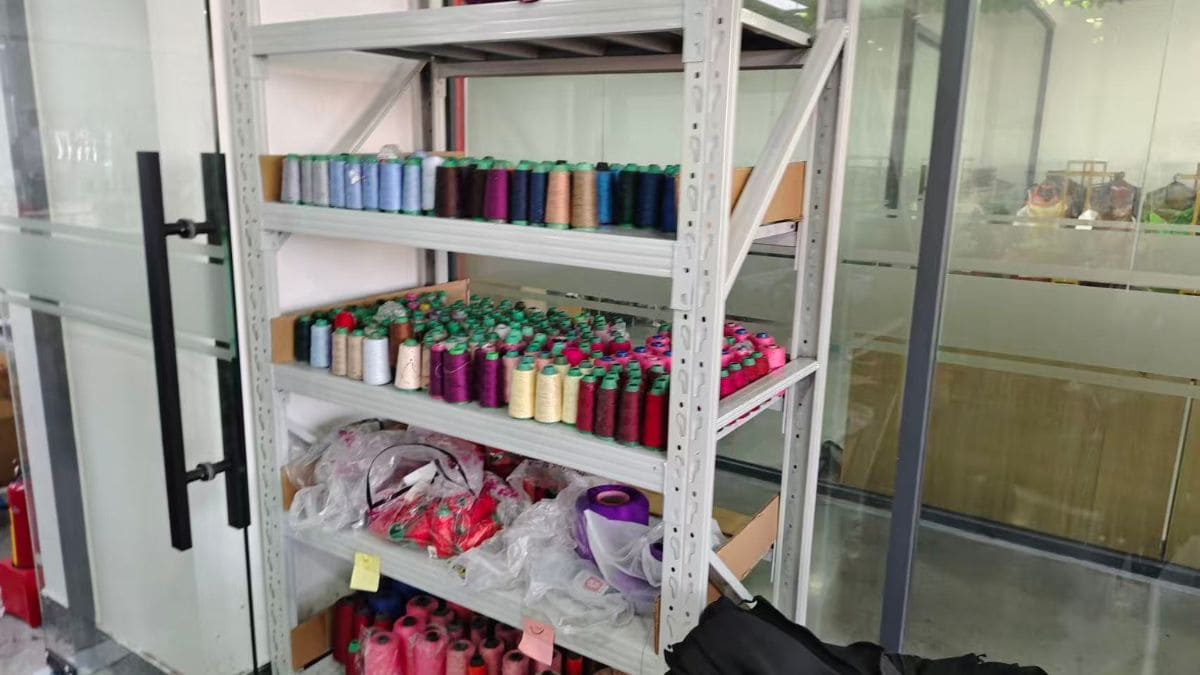
The sequence from greige to finished custom-dyed bandage knit involves distinct steps, each with a buyer-checkable parameter.
Understanding where pre-setting sits in that chain — and why it cannot be skipped — is the starting point for any brand commissioning a first signature-color lot.
Custom Dyeing Versus Pulling a Stock Shade
Stock and custom dyeing are not two speeds of the same process; they are structurally different procurement paths.
- Stock colors are dyed in shared mill lots and issued from ready fabric, so the shade already exists before your order arrives — no vat is opened for you, and no recipe is held exclusively for your brand.
- Custom dyeing starts from undyed viscose/nylon/spandex greige and aims at one brand Pantone, not the "closest" hanger color the mill happens to have in inventory.
- A signature color must match logos, campaign photography, and repeat seasons consistently; stock substitutes almost never achieve this because lot-to-lot variation in shared dye programs is not controlled to a single brand’s standard.
- Custom dyeing is decided at the fabric stage — garment-level tinting or spray finishing cannot produce an even shade across a bandage rib structure, because the rib texture creates shadow and highlight variation that amplifies any surface-level color inconsistency.
- Phone photos and website screenshots are not dye standards; the mill needs a physical chip, a cut swatch, or a signed lab-dip target to open a recipe — buyers should send a Pantone chip or a physical fabric reference before any dye conversation begins.
Dye-House Sequence for High-Elasticity Bandage Knits
Each step in the dye-house chain serves a specific purpose for elastic knit fabric, and each carries a parameter a buyer can put on the purchase order.
The table below maps the custom-dye sequence to its bandage-knit purpose and the buyer-checkable number at each stage.
| Process Step | Role in a Custom Color Bandage Knit | Parameter Buyers Can Put on the PO |
|---|---|---|
| Pre-setting | Eliminates residual stress in spandex before wet processing; prevents uneven shrinkage, creasing, and distortion during dyeing | Pre-set temperature: 125–135°C or ~185°C depending on fiber system; confirm with supplier |
| Scouring and de-oiling | Removes spinning oils and machine lubricants from the greige knit; incomplete scouring causes dye spots and uneven shade on bandage ribs | Specify elastic-fiber-compatible scouring agent; request confirmation that silicone oils are removed |
| Dyeing bath and heat curve | Dye is absorbed and diffused into viscose/nylon/spandex fibers under controlled temperature and time | Ramp rate: 1–4°C/min to 105–115°C; hold time: 40–50 min; confirm liquor ratio is appropriate for fabric load |
| Reduction wash / soaping | Removes floating dye from the fabric surface after the bath; this is the process-side foundation of wash-stable shade | Request confirmation that reduction wash is included; floating dye left on surface reduces wash fastness |
| Finish heat-setting and pre-shrink | Stabilizes final width, GSM, and loop geometry; controls wash-dimensional stability of the finished bandage knit | Confirm finished GSM (e.g., 350–360 gsm); specify maximum wash shrinkage tolerance in the PO |
Pre-setting is the step most often skipped by lower-tier dye houses, and its absence shows up as uneven dye uptake across the bandage rib — buyers should ask suppliers to confirm pre-setting temperature as a written spec before the lot is booked.
Lab-Dip Approval Before the Production Vat Is Booked
A lab dip is a small-scale dye trial on the actual production fabric, produced to match the buyer’s color target before the full production vat is loaded.
Approving the lab dip is the single most important checkpoint in the custom-dye process.
- Ask for lab dips on the same rayon-rich bandage quality and GSM that will go to bulk — a lab dip on a cheaper jersey substitute will not predict how the shade lands on a 360 gsm viscose/nylon/spandex bandage knit, because fiber composition and fabric density both affect dye uptake.
- Approve the shade under daylight and store lighting conditions; bandage ribs create shadow and highlight variation that can hide or exaggerate undertone more than flat knits, so a shade that looks correct under one light source may read differently under another.
- One rejected lab dip costs a sample fee; a rejected production vat costs the full dyeing vat cost plus the greige fabric — the commercial asymmetry makes lab-dip approval the cheapest insurance in the custom-dye process.
- Freeze the signed dip with a dip number, date, and Pantone reference on the custom bandage dress tech pack so the mill has a documented target and the buyer has a traceable record for reorders.
- Do not authorize the bulk vat to load until the lab dip is signed; "dye first, adjust later" is how signature colors drift lot to lot, because post-dye correction requires stripping and re-dyeing, which stresses bandage dress spandex and reduces elastic recovery.
Once the dye-house sequence and lab-dip protocol are locked, the next question is why the first custom-dye lot carries a cost line that stock orders do not.
Why Does a Custom Color Bandage Dress Carry a Dyeing Vat Cost?
Every custom-dye quotation for a bandage dress includes a line item that stock-color orders do not: a dyeing vat cost.
Dyeing vat cost is a fixed per-lot charge that covers machine occupation, utilities, and auxiliaries for one complete dye cycle — it is billed regardless of how much fabric fills the drum.
Buyers who understand this structure can negotiate more effectively and plan first-lot budgets without being surprised by the line item.
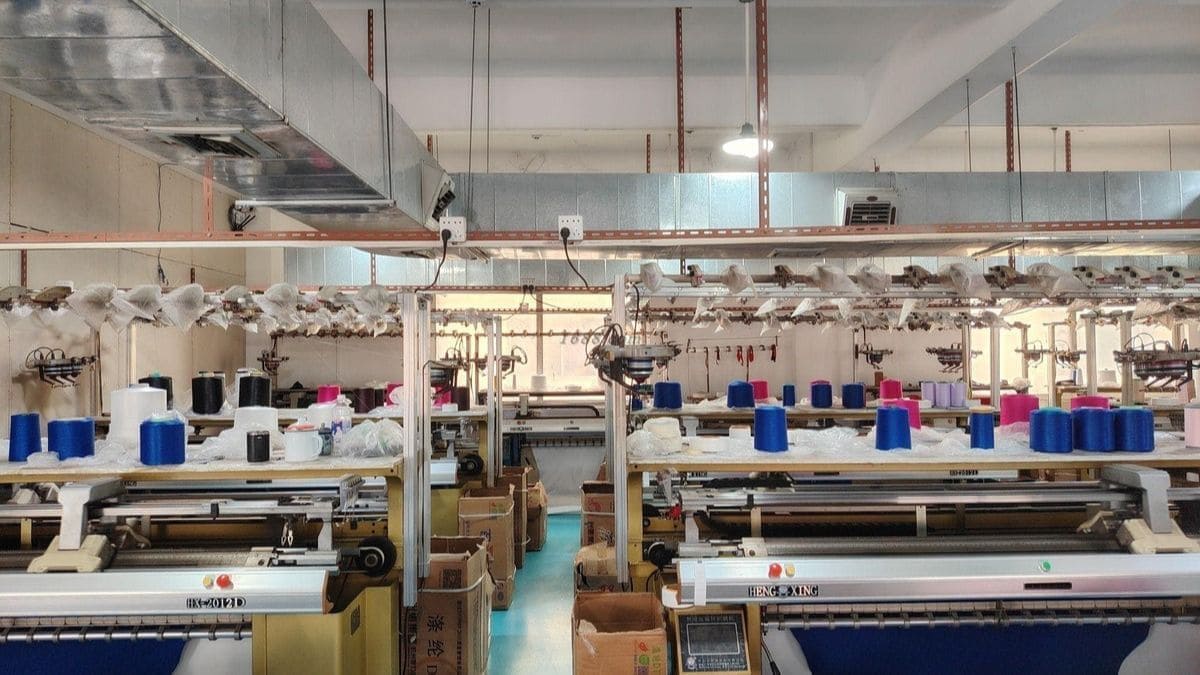
The vat cost appears because custom dyeing opens a dedicated machine cycle for one brand’s recipe, while stock-color programs spread that same fixed cost across many orders.
The two H3s below explain what the charge actually covers and why it is billed per lot rather than per dress.
What Dyeing Vat Cost Actually Covers
Vat cost is not a markup — it is a direct recovery of fixed costs that run whether the machine is full or half-empty.
- Vat cost pays for occupying a jet or overflow dyeing machine for a full cycle, often several hours, whether the drum is running at maximum fabric capacity or not — the machine is unavailable to other orders for that entire window.
- Water, steam, and electricity are sized to the liquor volume in the machine, not to the number of custom color bandage dresses that will eventually be cut from the fabric; a 300-liter bath costs the same to heat whether it holds 30 kg or 60 kg of greige.
- Salt, alkali, leveling agents, and other auxiliaries are dosed to the bath volume, so a small fabric load still requires a full working bath to achieve even dye distribution across the bandage rib structure.
- Operators load, shade-check at multiple points during the cycle, unload, and wash down the machine so the next color is not contaminated — that labor is part of the vat cost regardless of lot size.
- Dark-to-light color changeovers require additional cleaning time and sometimes a blank run to purge residual dye, which is why a one-off signature color — especially a light or pastel shade — is never "just a little extra dye."
Why Vat Cost Is Charged Per Lot, Not Per Dress
The per-lot billing structure follows directly from how dye machines operate.
- A half-empty vat still runs the same heat curve, hold time at 105–115°C, and wash-down sequence as a full vat — the process duration is determined by the dye recipe, not by fabric weight.
- Stock-color programs spread one large dye lot across many wholesale bandage dress orders from multiple buyers, so no single boutique or brand sees the vat fee as a separate line item — it is already amortized into the per-meter fabric price.
- A custom color cannot be combined with another brand’s lot because the recipe is exclusive to that shade; your order carries the entire vat cost for that cycle.
- That is why quotations show dyeing vat cost as a distinct line item on the first custom-dye run and sometimes on shade recuts when the recipe needs to be re-opened after a gap.
- Reorders of an already-approved shade can sometimes join a later vat of the same recipe if the mill schedules a repeat run, which reduces the effective per-unit vat cost on subsequent lots — buyers should ask suppliers whether recipe-sharing on reorders is available.
Stock-Color Pricing Versus Custom-Dye Lot Pricing
The table below shows where the cost gap between a stock-color order and a first custom-dye lot actually comes from.
Stock-color pricing already has vat cost baked in; custom dyeing surfaces it as a visible line item because the lot is exclusive.
| Cost Item | Stock Color Order | First Custom Dye Lot | Why the Gap Exists |
|---|---|---|---|
| Dyeing vat / machine occupation | Amortized across many orders; invisible in per-meter price | Charged as a fixed lot fee; appears as a line item on quotation | Custom lot cannot share machine time with other brands |
| Dyestuff and auxiliaries | Purchased in bulk for large shared lots; lower per-kg cost | Dosed to a single bath; smaller quantity at higher effective cost | No volume discount on a one-off recipe |
| Lab dip and shade correction | Not required; shade already exists in mill inventory | Required before vat is loaded; 1–3 rounds typical | Buyer’s Pantone target must be matched from scratch |
| Leftover liquor and minimum load | Spread across large lot; waste per meter is minimal | Small load in a standard-size machine increases waste ratio | Liquor ratio must be maintained for even dye on bandage ribs |
| Color cost per finished dress | Lower on first order; no exclusive recipe overhead | Higher on first order; vat cost + lab dip divided by fewer units | Fixed costs divided by smaller unit count on first custom run |
Once a buyer understands that the vat cost is a fixed lot charge rather than a per-dress premium, the MOQ question becomes easier to answer: the right MOQ for a custom-dye lot is the one that fills the vat efficiently.
Why Is Custom-Dye MOQ Slightly Higher Than Stock Bandage Dress Colors?
The MOQ difference between a stock-color order and a first custom-dye lot is real but narrow — and it is driven by physics, not factory policy.
Custom-dye MOQ steps up slightly because the dye vat requires a minimum fabric load to maintain the liquor ratio needed for even color on bandage rib knits; it is a dye-lot fill issue, not a sewing-capacity issue.
Buyers planning a first signature-color run should verify the minimum greige meters required for the specific vat size their supplier uses, then work backward to garment count.
Stock Colors Already Sit in Shared Dyed Inventory
Stock-color orders operate from a completely different inventory logic than custom-dye lots.
- Black and other ready shades are dyed in large shared lots, so garment MOQ is limited by cutting and sewing capacity, not by the need to fill a dye vat — the fabric is already dyed and sitting in inventory before the order arrives.
- The mill is not opening a unique recipe for a stock-color order; it is pulling fabric that other orders also use, which means the per-meter cost is already optimized across a large volume.
- That is why a stock-color bandage dress alternative can often run at the factory’s standard low MOQ bandage dress production — typically 50 pieces per style at Fangbei — without any vat-fill calculation involved.
- Ready shades restock faster because greige is not waiting on a unique lab dip approval and a dedicated vat booking; the lead time is driven by cutting and sewing, not by dye-house scheduling.
- Stock is the right path when a brand does not need a protected signature shade and is comfortable with the color being available to other buyers from the same mill.
Custom Color Must Put Enough Greige in the Vat to Make the Lot Work
The liquor ratio requirement is the technical reason custom-dye MOQ is higher than stock-color MOQ.
- Liquor ratio on elastic knits requires a minimum fabric load; too little cloth in too much water produces uneven dye uptake across the bandage rib structure, because the dye concentration per unit of fabric becomes inconsistent as the bath exhausts.
- A first custom color bandage dress order must generate enough greige meters to approach the minimum load for the vat size being used — buyers should ask suppliers to state the minimum kg of greige per dye cycle.
- If garment count stays at the stock-color MOQ, the mill either underloads the vat and risks uneven shade, or bills the buyer as if the vat were full — neither outcome is favorable.
- Raising MOQ slightly spreads the fixed dyeing vat cost across more units and keeps shade even from the first meter to the last meter of the lot.
- The increase is a dye-lot fill issue, not a sewing-capacity issue, which is why it is described as slightly higher rather than a fundamentally different production model.
Planning the First Signature-Color Run Without Overbuying
The table below gives brands a planning grid for keeping custom-dye MOQ only slightly above stock-color levels.
The key lever is filling one vat efficiently — not inflating every future order.
| Color Path | What Sets MOQ | MOQ Versus Stock Color | Best Use for a Brand |
|---|---|---|---|
| Ready stock shade | Cutting and sewing capacity | At or near standard garment MOQ (e.g., 50 pcs/style) | Testing a new silhouette; no color exclusivity needed |
| First-time Pantone custom dye | Minimum greige load for dye vat fill + lab dip approval | Slightly higher than stock; confirm minimum kg with supplier | Launching a protected signature color for the first time |
| Same custom color cut across two silhouettes | One dye lot shared across two cutting plans | Same as single-silhouette custom lot; vat cost paid once | Maximizing vat fill without overbuying one style |
| Repeat order of an approved dye lot | Recipe already exists; may join a scheduled vat run | Can return to near stock-color MOQ on reorders | Seasonal restocking of an established signature shade |
Combining Silhouettes in One Dye Lot to Absorb Vat Cost
Splitting a custom-dye lot across multiple silhouettes is the most practical way to keep per-unit cost close to stock-color pricing on a first run.
- A mini, a midi, and a two-piece set can share one custom dye lot if they use the same bandage quality, the same GSM, and the same shade recipe — the vat does not distinguish between silhouettes, only between fabric specifications.
- Combining styles raises the total greige meters in the vat without forcing any single silhouette into dead stock; a brand can order 30 pieces of a mini and 30 pieces of a midi from one dye lot rather than 60 pieces of one style.
- The vat still runs once; dyeing vat cost is paid once; the garment mix is a cutting plan decision, not a second dye lot.
- Do not mix different GSM values or different fiber routes in the same vat — a 360 gsm viscose/nylon/spandex bandage knit and a 350 gsm polyester/viscose blend will not absorb the same dye recipe at the same rate, and the signature color will not land consistently across styles.
- After the first lot is approved and the recipe is documented with a dip number and Pantone reference, reorders can hold or ease MOQ because the dye house already has a verified recipe on file.
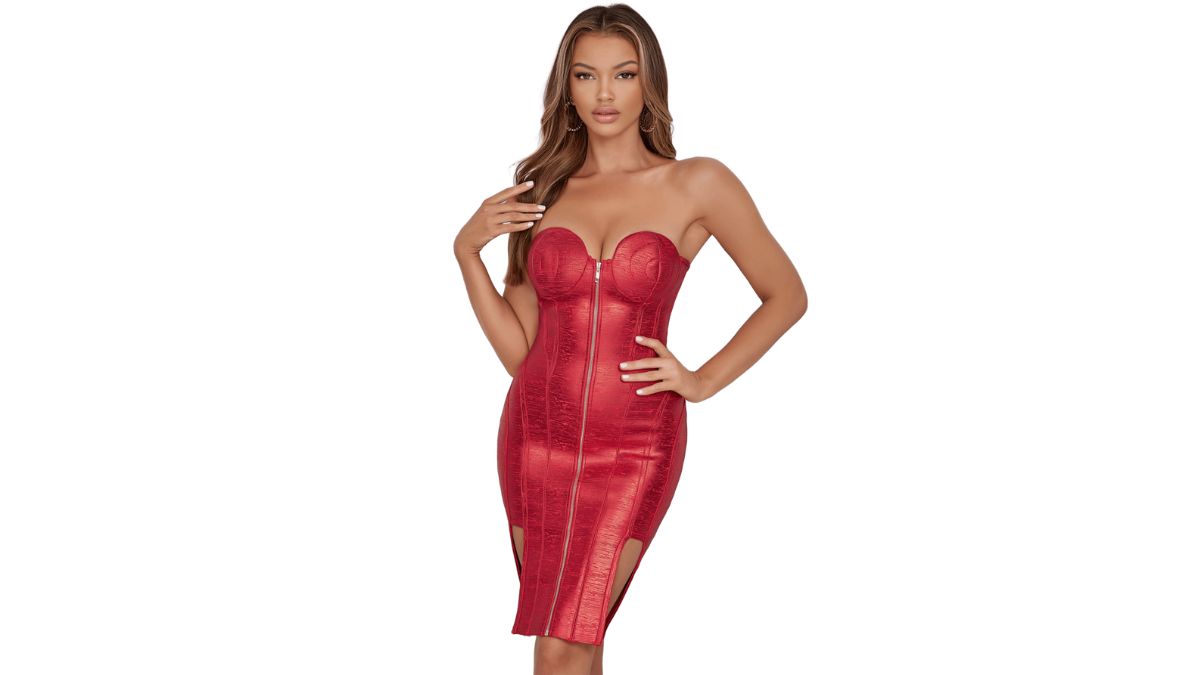
Color Fastness After Custom Dyeing
Proper custom dyeing includes a reduction wash after the dye bath to remove floating dye from the fabric surface before heat-setting, which is the process-side foundation of wash-stable shade in a custom-dyed bandage knit.
For a detailed breakdown of color-fastness testing methods and bulk production standards, see our dedicated article on ensuring color fastness in bulk bandage dress production.
Conclusion
A custom color bandage dress is a dedicated dye lot: lab-dip the shade on the correct rayon-rich bandage quality, accept the dyeing vat cost as a fixed per-lot charge, and plan MOQ around vat fill rather than sewing minimums.
Getting all three right on the first run protects color consistency across every reorder.
Fangbei supports custom-dye programs from Pantone chip to finished garment, with lab dip approval built into the sample process.
Send a Pantone chip or physical swatch and review our custom bandage dress production capabilities, or discuss your custom-dye quotation — vat cost, lab dip, and first-lot MOQ broken out as separate line items — with our B2B bandage dress sourcing team