
Most boutique owners set retail tickets by feel — they double the invoice and hope the margin holds.
With bandage clothing, that approach fails quietly: the factory cost is higher than jersey, the customer compares you to luxury bandage dresses, and one markdown can erase a season.
The fix is a number, not a feeling.
A bandage dress boutique prices for retail success by multiplying a fully loaded landed cost — not the raw factory quote — by either 3x or 5x depending on the SKU’s role on the rack.
Core, replenishable styles carry a 3x multiple; custom, private-label, and event pieces carry 5x.
Both multiples beat apparel keystone and leave room for a planned sale without going below cost.
Before setting any ticket, calculate one landed-cost number per SKU and write it down.
The sections below build that number, show when to apply each multiple, and turn 3x and 5x into a rack architecture that holds through markdowns.
What Cost Should a Bandage Dress Boutique Multiply?
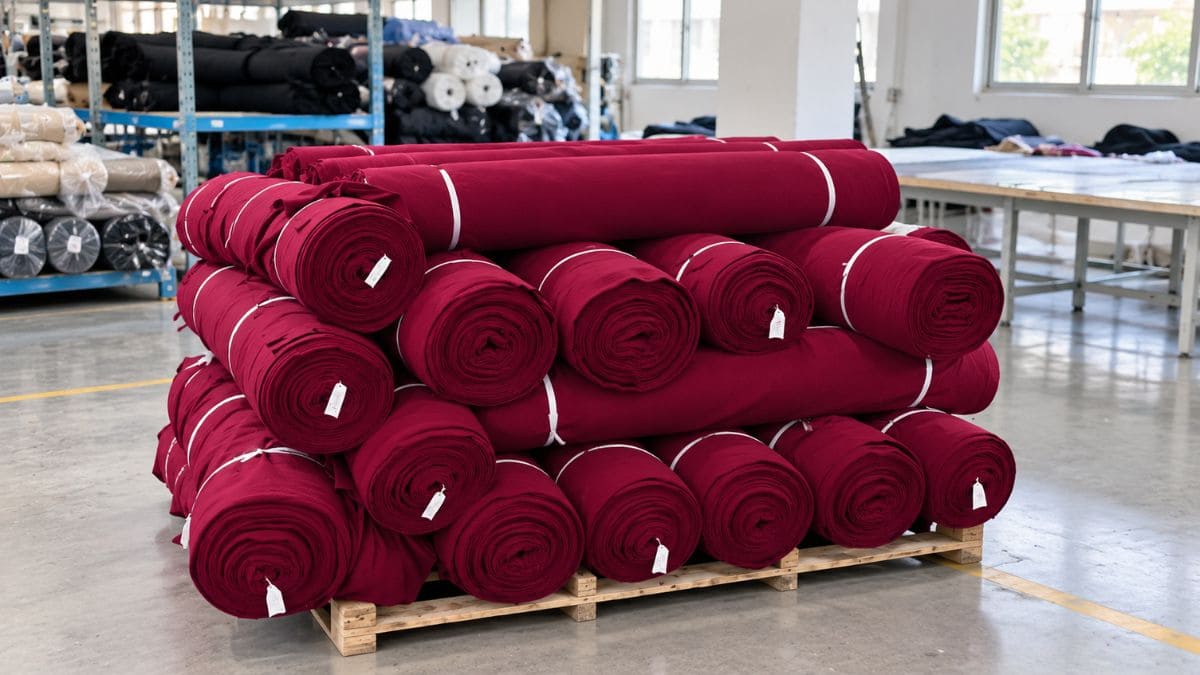
A bandage dress boutique should multiply fully loaded landed cost, not the factory FOB quote. Landed cost includes the factory price plus duty, inbound freight, local finishing, and amortized sample or setup fees, so every ticket is built on the real cost of putting one sellable dress on the rack.
A bandage dress boutique must calculate one landed-cost number per SKU before applying any retail multiple.
Landed cost is the total per-unit spend required to move a dress from the factory floor to the selling rack, including duty, freight, and any local finishing the boutique actually performs.
Marking up FOB alone creates a ticket that looks profitable on paper but loses margin after the carton arrives.
With the correct cost base established, the next step is to break down exactly which dollars belong in that landed-cost calculation.
Factory FOB Is Not the Number You Mark Up
The mill quote is a starting point, not a markup base.
- The factory quote arrives as FOB or ex-works; a bandage dress boutique never multiplies that raw figure, because it excludes every cost that sits between the factory gate and the selling rack.
- Duty, inbound freight, and last-mile delivery are real dollar amounts that land on the boutique’s account before a single dress is sold — they belong in the cost, not in the margin.
- Marking up FOB alone makes a 3x ticket look rich on paper and thin after the carton lands; the apparent margin shrinks by every dollar of duty and freight that was not included in the base.
- Write one landed-cost number per SKU before any conversation about 3x or 5x — that number is the only defensible multiply base.
The Landed-Cost Stack Boutique Owners Must Add
Building landed cost is addition, not estimation.
- Add import duty and inbound freight as actual dollar amounts per unit — divide the total freight invoice by the number of units in the shipment and add the duty rate applied to the FOB value; these are not approximations.
- Add local finishing costs — steam time, hangers, price tickets, and any prep labor — only if the boutique actually spends those dollars before the dress hits the floor; do not include costs that do not happen.
- Divide one-time sample and setup fees across the units in that colorway so custom development work is not treated as free; a $200 sample fee spread across 50 units adds $4.00 to the landed cost of every dress in that run.
- The sum of FOB, duty, freight, local finishing, and amortized setup is the only cost a bandage dress boutique should multiply — nothing else belongs in the base.
Landed-Cost Card Before Markup
The table below shows which dollars belong in the unit cost a boutique will multiply by 3 or by 5.
| Cost Line | Include in Markup Base? | How to Allocate | If You Skip It |
|---|---|---|---|
| Factory unit price (FOB) | Yes — always | Direct per-unit cost from invoice | Markup base is incomplete from the start |
| Import duty | Yes — always | Duty rate × FOB value, divided by units | Ticket looks profitable; margin disappears at customs |
| Inbound freight per unit | Yes — always | Total freight invoice ÷ units in shipment | Every freight dollar comes out of gross margin |
| Local finishing (steam, hanger, ticket) | Yes — if actually spent | Actual labor and supply cost per unit | Hidden labor cost erodes net margin silently |
| Sample or setup fee spread across the run | Yes — for custom work | Total sample cost ÷ units in that colorway | Custom development is subsidized by the boutique, not priced into the ticket |
Every row in this table that is skipped becomes a margin leak that shows up at the end of the season, not at the point of sale.
Why a Thin Markup Fails Faster on Bandage Wear
The category punishes under-pricing more sharply than jersey or casual knits.
- A high quality bandage dress costs more per unit than a comparable jersey style, so a 2x keystone leaves almost no room after rent, card fees, and staff — the absolute dollar margin is too thin to absorb normal operating costs.
- Event customers standing in a bandage dress boutique are comparing the rack to luxury bandage dresses and contemporary occasion wear, not to a $29 club knit; a 2x ticket signals discount, not value.
- One markdown on a heavy occasion silhouette can wipe a season’s margin if the opening ticket was already at 2x — there is no floor left to mark down to without going below cost.
- That is why this category starts the pricing conversation at 3x, not at keystone — 3x is the minimum that funds the business after landed cost is correctly calculated.
Once the landed cost is locked, the next decision is which multiple to apply to each SKU.
Should a Bandage Dress Boutique Use 3x or 5x Markup?
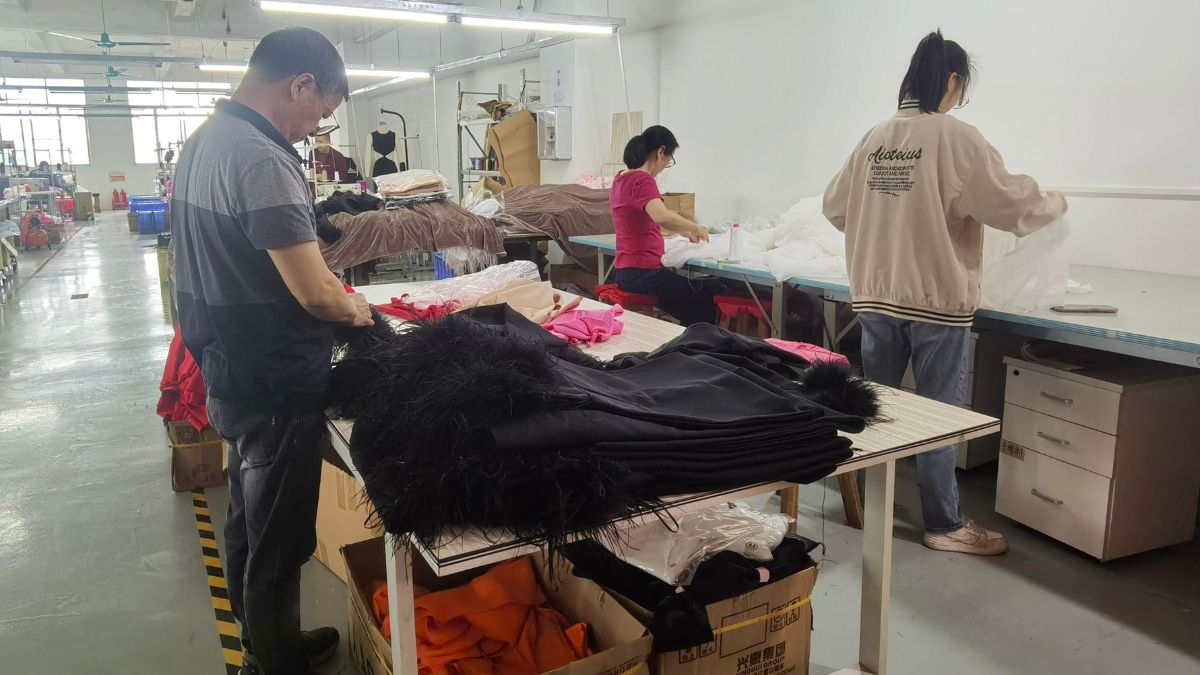
The markup multiple should follow the SKU’s role, not the boutique owner’s instinct. Core replenishable styles can support 3x landed cost, while custom, private-label, and occasion pieces justify 5x because they offer exclusivity the customer cannot easily replicate elsewhere.
A bandage dress boutique should apply 3x to core replenishable styles and 5x to custom, private-label, or occasion pieces — the multiple is determined by whether the customer can replicate the purchase elsewhere, not by how the dress looks on a hanger.
Both multiples beat standard apparel keystone (2x) and leave room for a planned markdown without going below landed cost.
Assign the multiple before the order is placed, not after the invoice arrives.
The ticket math below shows how the same landed cost produces very different retail positions under each multiple.
3x Markup for Core, Replenishable Styles
Three times landed cost is the working multiple for the styles that keep the boutique running.
- Use 3x on running colors and cuts the boutique will reorder: a black mini, a nude midi, a workhorse 2-piece bandage set — styles where the factory can ship again in four to six weeks and the customer expects a consistent price.
- 3x still beats apparel keystone and generates enough gross margin to fund rent, staff, and a planned end-of-season sale without going under landed cost on the clearance rack.
- An affordable bandage dress in the window at 3x can still read boutique rather than discount — the price point is not the problem; the presentation and the product quality carry the positioning.
- Do not put exclusive custom work on 3x; that is how a bandage dress shop underprices its own label and trains customers to expect custom quality at commodity prices.
5x Markup for Custom, Private-Label, and Event Pieces
Five times landed cost is the multiple for styles the boutique owns exclusively.
- Use 5x when the dress carries the boutique’s own color, its own label, or an occasion silhouette the customer cannot match at the store next door — exclusivity is what justifies the higher multiple.
- A celeb boutique bandage dress look, a custom midi in a proprietary colorway, or a bandage gown for a formal event can hold 5x because the customer is buying a specific night and a specific look, not a commodity style.
- 5x is the multiple that makes low-volume custom production worth the boutique’s time — at 3x, the economics of a small custom run rarely justify the development cost; at 5x, they do.
- If the comparable on the street is an expensive bandage dress at designer retail, 5x on a factory-direct custom piece is often still meaningfully below that ceiling, which means the multiple is both defensible and competitive.
3x Versus 5x Ticket Math
The table below puts 3x and 5x next to the same landed costs so a bandage dress boutique can pick the multiple by SKU role, not by guess.
| Landed Factory Cost | 3x Retail Ticket | 5x Retail Ticket | Which Multiple to Use |
|---|---|---|---|
| $18 (core mini bandage dress) | $54 | $90 | 3x — replenishable running color |
| $24 (core midi bandage dress) | $72 | $120 | 3x — replenishable core style |
| $32 (private-label 2-piece set) | $96 | $160 | 5x — custom colorway or label |
| $28 (bandage jumpsuit) | $84 | $140 | 5x if custom; 3x if running mill style |
| $45 (event maxi or gown) | $135 | $225 | 5x — occasion piece, low reorder risk |
Landed cost in this table is illustrative — actual landed cost depends on FOB, duty rate, freight, and local finishing for each specific order. Use your own landed-cost card to populate the left column before reading the ticket columns.
Why Bandage Fabric Can Support 5x When Jersey Cannot
The category earns a higher multiple because the customer experience justifies it.
- Customers feel sculpting hold and cloth weight in the fitting room; that hand-feel is what a premium bandage dress is sold on, and it is a tangible difference the customer registers before she looks at the price tag.
- Occasion wear has a higher willingness to pay than everyday jersey of the same length — the customer buying a bandage outfit for an event is not comparing it to her daily wardrobe; she is comparing it to the cost of the night.
- The boutique’s wholesale cost already bought a heavier, denser knit; the 5x ticket is how the boutique is paid for that investment in quality, not a margin grab on a commodity product.
- This is not a fabric science argument — it is a customer behavior observation: bandage wear commands a higher multiple because the customer’s reference point is occasion spending, not everyday apparel spending.
When 5x Will Not Stick
Five times landed cost is not a universal rule — it requires the right context.
- 5x fails if the store next door is a fast-fashion rack selling visually similar styles at $40; the customer will not pay $140 for a dress she perceives as the same product, regardless of the actual quality difference.
- 5x fails if the style is a running mill color that any boutique can reorder from the same factory — exclusivity is the justification for 5x, and a non-exclusive style does not have it.
- If 5x sits above every local comparable and the boutique cannot demonstrate the quality difference in the fitting room or in the product photo, drop that SKU to 3x or do not buy it.
- Protect the 5x ladder for true custom work so the whole bandage dress boutique does not look randomly priced — a rack where some dresses are at $54 and others are at $225 needs a clear logic the customer can read, not a mix of multiples applied without a rule.
With the multiples assigned by SKU role, the next step is turning those numbers into a rack architecture that holds through markdowns.
How Should a Bandage Dress Boutique Structure Tickets Across the Rack?
A boutique rack needs a visible price ladder: entry, core, and hero. Entry and core styles should sit at 3x landed cost, while custom hero pieces carry 5x, giving customers a clear read from accessible first purchase to premium occasion dressing.
A bandage dress boutique should structure tickets by assigning entry and core styles to 3x and hero pieces to 5x, then plan markdowns toward 3x rather than toward cost.
This creates a rack that is easy for customers to understand and protects margin through the selling season. A markdown below landed cost is not a promotion; it is a loss.
The three tiers give the customer a clear read: she can walk in at the entry price, build confidence at the core price, and aspire to the hero price.
The sale rule protects the floor: a markdown that goes below landed cost is not a sale, it is a loss.
Map every SKU to a tier before the season opens, not after the rack fills up.
Entry, Core, and Hero Tickets in One Shop
Three price tiers, two multiples, one consistent logic.
- Entry: 3x on a core mini or a simple bandage set so a first-time customer can walk in without sticker shock — the entry ticket is the door, not the ceiling.
- Core: 3x on the replenishment colors that pay the rent every month — these are the styles the boutique reorders, the customer returns for, and the rack cannot be without.
- Hero: 5x on custom midi, gown, or jumpsuit pieces that define the bandage dress boutique’s identity — these are the styles that appear in the boutique’s content, attract the event customer, and justify the shop’s positioning above fast fashion.
- Never let the hero ticket sit only a few dollars above the entry ticket; if a $54 entry dress and a $58 hero dress share the same rack, the 5x multiple stops looking earned and the whole price architecture collapses.
Price Architecture by Product Type
The table below maps product types to multiples so a boutique bandage assortment has a clear ticket ladder from the first day of the season.
| Product Type | Suggested Multiple | Role on the Rack | Sale Rule |
|---|---|---|---|
| Bandage mini dress | 3x | Entry and core; high turn, replenishable | Mark to cost floor; do not go below landed cost |
| Bandage midi dress | 3x | Core; drives repeat purchase and monthly revenue | Planned markdown to clear season color only |
| 2-piece set (top + skirt) | 3x or 5x | 3x if running style; 5x if custom colorway or label | Separate top and skirt tickets if set is split |
| Jumpsuit or romper | 5x if custom; 3x if running | Hero if custom; core if mill color | Same markdown rule as the multiple applied |
| Maxi or gown | 5x | Hero; occasion piece, low reorder frequency | Hold ticket; mark only at end of event season |
| Pants set or skirt set | 3x or 5x | 3x if replenishable; 5x if private label | Apply the same rule as the 2-piece set |
Product types listed here correspond to the core categories available from bandage dress wholesale programs — verify the specific landed cost for each style before assigning a multiple.
Psychological Endings and a Planned Bandage Dress Sale
Ticket endings and markdown timing are part of the price architecture, not afterthoughts.
- End hero tickets on round numbers — $160, $200, $225 — when the boutique wants a luxury read; .99 endings signal discount, and a bandage dress shop positioning above fast fashion should not send that signal on its hero pieces.
- Plan markdowns from 5x toward 3x, not from 3x toward cost — a hero piece that opens at $200 (5x on $40 landed cost) can be marked to $120 (3x) and still be profitable; a core piece that opens at $72 (3x on $24 landed cost) has no room to mark down without going below cost.
- A bandage dress sale should clear a season color or an end-of-run style, not train customers to wait for 50 percent off the whole rack; blanket discounting destroys the price architecture and the boutique’s positioning simultaneously.
- If a SKU cannot survive a 3x floor after markdown, it was either bought at the wrong cost or ticketed at the wrong multiple — the problem is in the buying decision, not in the sale.
Checking the Ceiling Without Copying a Marketplace
The local and designer market sets the ceiling; the boutique’s multiple sets the floor.
- Glance at designer and contemporary street prices only as a ceiling check — if a comparable luxury bandage dress retails at $350, a 5x ticket at $200 is well inside the ceiling and does not need to be defended.
- The boutique’s ticket is landed cost times 3 or 5, then trimmed only if it overshoots the local ceiling — the multiple comes first; the ceiling check comes second.
- Do not reverse-engineer a marketplace price and call it boutique strategy; marketplace tickets are built for platform traffic and volume, not for the margin structure of a physical or independent bandage dress shop.
- A boutique that owns its multiple can sit comfortably under designer retail and clearly above fast fashion — that gap is the boutique’s commercial position, and the 3x/5x structure is what holds it open.
Why Marketplace Tickets Are the Wrong Template
Marketplace tickets are built for platform traffic and thin margins; a bandage dress boutique should multiply landed factory cost by 3x or 5x instead of matching those prices.
For a detailed ASOS pricing breakdown, see our dedicated article on the ASOS bandage dress market.

Conclusion
Retail success for a bandage dress boutique is a multiple applied to a real number, not a guess applied to an invoice.
Land the per-unit cost correctly — FOB plus duty, freight, finishing, and amortized setup — then ticket core styles at 3x and custom or event bandage wear at 5x, with markdowns planned from 5x toward 3x and never below cost.
Fangbei works with boutique owners at this exact step: share your target retail range, and our team will provide a factory quote you can run the 3x/5x card against before you commit to an order.
Browse our wholesale bandage dress programs or send your target price range directly to our sourcing team to get started.