Buyers comparing knitting setups often assume that a computerized bandage knitting machine automatically means better repeatability, seamless construction, or a wider stitch range.
Those assumptions lead to the wrong questions at the sampling stage and to bulk cloth that does not match the approved reference.
A bandage knitting machine repeat depends on how well feed, course length, tension, and stitch settings are saved and recalled—not on whether the machine has a screen.
Computerization improves the precision of that record, but it does not change the machine path, and it does not form a finished dress.
Understanding what each control generation can and cannot repeat is the practical starting point for any buyer who needs bulk cloth to match a confirmed sample.
The sections below work through control evolution, the four parameters that must stay steady on the applicable machine, machine path selection, and the records that make a repeat run traceable.
How Did Bandage Knitting Machine Control Move from a Hand Setup to a Stored Program?
A mechanic adjusting cams by feel and a program file recalled from a server are both ways of telling a knitting machine what to do.
The difference is not speed or modernity—it is how much of the approved setup survives into the next production run.
Each generation of bandage knitting machine control adds one more layer of saved information, moving the repeat decision from a person’s memory toward a retrievable file.
The gain at each step is narrower than it sounds: storing a course-length number does not add needle selection, and storing a full program does not prevent an operator override.
Knowing which layer is actually in place on the machine that will run the sample cloth tells a buyer exactly what can be matched in bulk and what still depends on the operator.
Hand-Set Cams and Stitch Length with Little Stored Data
Mechanical setup without electronic storage is still in use on older machines and in smaller facilities.
- A mechanic sets cams and stitch length directly on the machine before a run; the next shift may find the same machine in a different position if any adjustment was made between orders.
- Yarn feed rate and tension depend on the physical hardware position and the operator’s judgment, with no electronic record of where those controls ended up after the approved sample was knitted.
- A repeat order can drift if a needle breaks, a cam wears, or a feeder is corrected mid-run and the original position is not restored exactly.
- Paper setup cards can disagree with the actual machine state once someone changes a setting without updating the card; two cards for the same style may carry different numbers with no version mark to distinguish them.
- This mode can still produce acceptable bandage dress fabric, but the repeat depends on the same mechanic returning to the same machine with the same memory, not on a recalled file.
Positive Feed and a Stored Stitch Length
Adding positive yarn feed and electronic stitch-length storage is the first step that gives a repeat order a number rather than a memory.
- Positive yarn feed measures a defined length of yarn into the needles on each course, instead of letting yarn tension alone determine how much is consumed; this limits the course-length swing that passive feed allows.
- A stored course-length target gives the next run a specific number to match, so the mechanic is checking against a record rather than relying on feel.
- Elastane feed stays a separate setting from the ground-yarn feed even on this intermediate setup; the two are not combined into one tension dial, and the elastane rate needs its own logged value.
- Electronic storage of stitch length does not by itself add electronic needle selection; the machine still selects stitches through its mechanical cam arrangement.
- The gain at this stage is a steadier repeat of stitch density and elasticity across rolls, not a new fabric category or a different machine path.
A Program File the Next Order Can Call Back
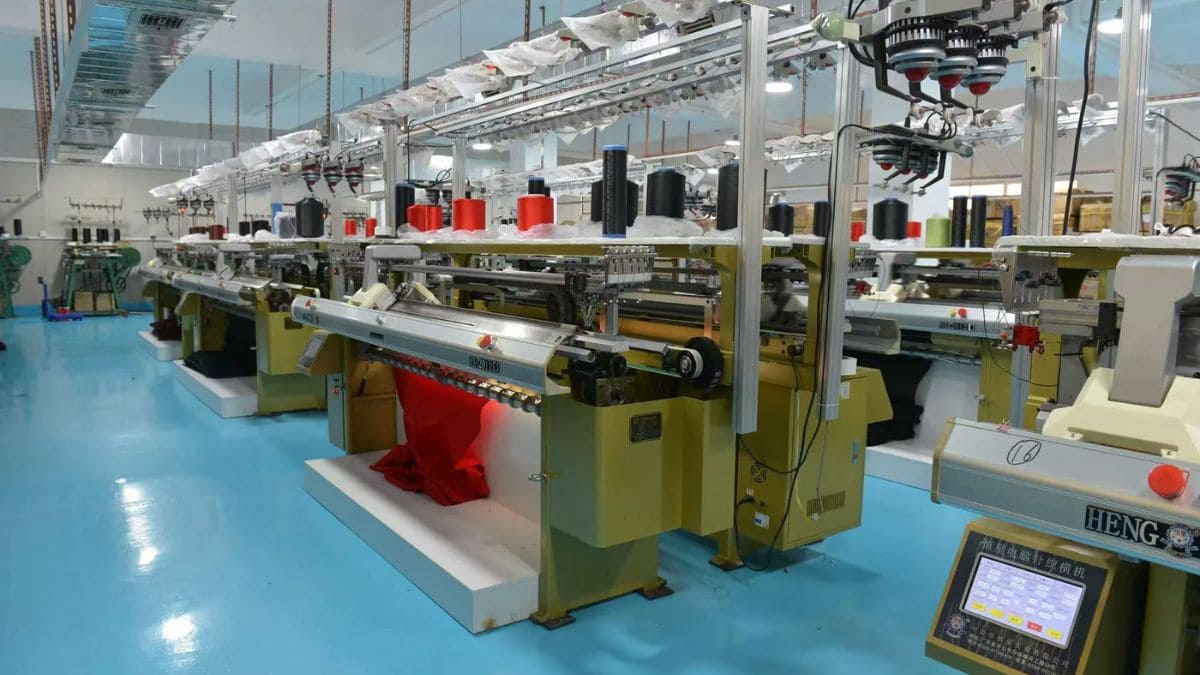
Full computerization stores feeder assignment, stitch selection, and course-length target together in one retrievable file.
- A computerized file can hold feeder assignment, stitch-selection sequence, and the approved course-length target in a single named version, so the next order loads one file rather than reconstructing several separate settings.
- The same file can be loaded again only if the machine has the same cylinder diameter, gauge, and feed hardware as the machine that produced the approved sample; a file written for one machine does not transfer to a different configuration.
- A file version number separates the approved sample setup from any later trial change; without version control, a modified file can overwrite the approved one without a visible record.
- Computer control still fails to repeat the approved cloth if the operator overrides feed rate or tension during the run and leaves the file unchanged; the file records the intended setup, not the actual run.
- The program repeats the knitting setup; it does not inspect the finished cloth, approve the dress, or confirm that the yarn lot matched the sample lot.
What Each Control Mode Can Repeat
The table below compares what each generation of control saves and where the record still has gaps.
| Control mode | How feed and stitch length are set | How the stitch sequence is selected | What a later order can repeat | What is weakly recorded |
|---|---|---|---|---|
| Hand-adjusted mechanical setup | Cam and stitch-dial position set by mechanic; no electronic record | Mechanical cam arrangement; changed by swapping or adjusting cams | The mechanic’s memory and the paper card, if unchanged | Feed position, tension, elastane rate, any mid-run correction |
| Mechanical machine with positive yarn feed | Positive feed measures yarn per course; stitch length stored electronically | Mechanical cam arrangement unchanged | Course-length target as a number; steadier density repeat | Elastane feed rate, tension setpoints, cam position |
| Electronic feed with a stored course length | Feed rate and course length stored as setpoints | Mechanical cam arrangement; needle selection still hardware-dependent | Feed rate and course length together; closer roll-to-roll match | Elastane tension, take-down, machine speed, stitch sequence detail |
| Computerized program with electronic needle selection | All feed, tension, and stitch parameters stored in one file | Electronic needle selection from the program file | Full setup file recallable by version number | Operator overrides not written back to the file; yarn lot not stored in the program |
What Must a Bandage Knitting Machine Hold Steady on Feed, Length, Tension, and Stitch?
Knowing that a machine has positive feed or a stored program is not the same as knowing which parameters are actually logged for the approved cloth.
A stretch bandage dress fabric that passes sample approval can still arrive in bulk with uneven recovery if any one of the four controls drifted between runs.
Feed, course length, tension, and stitch selection each need their own setpoint and their own record; treating them as a single "machine setting" is the most common reason a bulk roll fails to match the approved bandage knit dress sample.
Before bulk knitting starts, the buyer should confirm that each of the four controls has a written target attached to the approved cloth, not just a general note that the machine ran correctly.
Ground Yarn and Elastane Fed as Two Controls
Ground yarn and elastane travel through separate feed paths and require separate records.
- Ground yarn and elastane enter the machine through different feed mechanisms and are not governed by one tension dial; adjusting one does not automatically correct the other.
- Positive feed on the ground yarn limits the yarn-length variation that passive feed allows, but the elastane is typically fed under a separate tension control that must be set and logged independently.
- The elastane feed rate is set for the approved cloth specification and recorded apart from the ground-yarn setting; a single combined note does not capture both.
- A feeder that stops mid-run or slips shows up in the finished cloth as a barre stripe or a soft band across the width—a specific, locatable fault, not a general quality comment.
- Feed settings are meaningful only for the named machine and the specific yarn lot loaded on it; the same numbers on a different machine or a different lot are a starting point for a trial, not a confirmed repeat.
Course Length as the Repeat Number
Course length is the single number that ties stitch density, cloth weight, and stretch behavior together across runs.
- Course length is the length of yarn consumed over an agreed needle count—commonly expressed per 100 needles—and it is written as a target number attached to the approved cloth, not left as a general density description.
- Holding the same course-length target from sample to bulk keeps stitch density, cloth weight, and stretch recovery behavior closer across rolls; a deviation of even a few millimeters per 100 needles accumulates across the full roll.
- A longer or shorter course on part of a roll produces uneven recovery in that section of the finished skirt; the fault is visible as a band of different tension or a change in surface density.
- The approved sample cloth needs its measured course length recorded and attached to the knitting order before bulk starts; the factory cannot match a number that was never written down.
- A new yarn lot can change the course length needed to achieve the same cloth weight and stretch; the old target is not copied to the new lot without a trial run and a measurement check.
Tension and Take-Down Kept with the Program
Tension setpoints and take-down are part of the knitting record, not background conditions.
- Ground-yarn tension and elastane-feed tension are recorded as specific setpoints, not described as "normal" or adjusted by feel during the run; a feel-based adjustment that is not written back into the record breaks the traceability chain.
- Take-down tension—the force pulling the knitted fabric away from the needles—is included in the record because it directly changes loop shape and can introduce skew or width variation across the roll.
- Machine speed is logged alongside those setpoints because running the same feed settings at a higher speed can change the effective yarn delivery and alter the resulting cloth.
- An elastane tension drift during a run is treated as a knitting-control fault to be corrected and recorded; it does not require a fiber-science explanation to be flagged and addressed.
- Any setpoint changed during the run is written as a new version of the setup record, not left as an unnoted tweak; an unchanged file that no longer matches the actual run is not a reliable repeat reference.
Stitch Selection Stored Without Becoming a Texture Menu
Storing a stitch program records what the machine did; it does not expand what the machine can do.
- Stitch control in a saved program means the recorded knit, tuck, miss, or plating action that the applicable machine executed for that cloth; it is a record of the actual stitch sequence, not a menu of available options.
- Plating or laying in elastane is recorded as the yarn path used for that specific cloth construction; the record confirms how the elastane was introduced, not what fiber properties it carries.
- A basic computerized jersey machine is not described as capable of selecting every stitch structure; the program can only call back structures the machine’s needle-selection hardware can physically execute.
- The stored program proves which stitch sequence ran on the approved cloth; it does not allow the buyer to choose rib, jacquard, or a raised surface unless the machine has the hardware to produce those structures.
- If the machine lacks the needle-selection hardware for a particular structure, loading a file that calls for it produces an error or a default action, not the intended cloth.
The Four Controls and the Record Each One Needs
| Controlled item | Machine element that sets it | Repeat risk if it drifts | Record kept with the lot |
|---|---|---|---|
| Ground-yarn feed | Positive feed wheel or feed roller; speed set as a ratio or RPM | Course length changes; cloth weight and density shift across the roll | Feed rate as a number, tied to the yarn lot and machine identity |
| Elastane feed | Separate elastane feeder with its own tension or speed control | Local elasticity drops or rises; barre or soft band appears in the cloth | Elastane feed rate and tension setpoint, logged separately from ground yarn |
| Course length | Combination of feed rate and machine speed; measured per agreed needle count | Stitch density, weight, and stretch recovery vary between sample and bulk | Course-length target in mm per 100 needles, measured on the approved sample cloth |
| Yarn and elastane tension | Tension discs, spring tensioners, or electronic tension control | Loop shape changes; cloth skews or width varies; elastane pre-extension shifts | Tension setpoints for both yarn streams, with machine speed noted |
| Stitch selection and plating | Cam arrangement or electronic needle selector | Stitch sequence changes; plating position shifts; cloth surface differs from sample | Program file version with stitch sequence confirmed; plating path noted |
| Take-down and machine speed | Take-down roller speed; machine RPM | Loop shape distorted; width and weight affected even at correct feed settings | Take-down tension and machine speed logged with the other setpoints |
Which Bandage Knitting Machine Path Is in Use, and Why Computer Control Is Not Seamless?
A buyer who asks whether a supplier has a computerized bandage knitting machine is asking a narrower question than it sounds.
Computerization describes the control system, not the machine path, and the machine path determines what cloth the order will actually produce.
Circular weft, flat weft, and warp knitting are three different paths, each with its own feed logic, course-length definition, and output format; a control file written for one path does not transfer to another, and none of them produces a seamless finished dress by default.
Confirming which path will run the sample cloth is the first question to settle before any control record is compared.

Circular Weft Yardage as the Common Path, Not the Only Path
Most bandage dress fabric is produced on circular weft machines, but that frequency does not make it the only valid route.
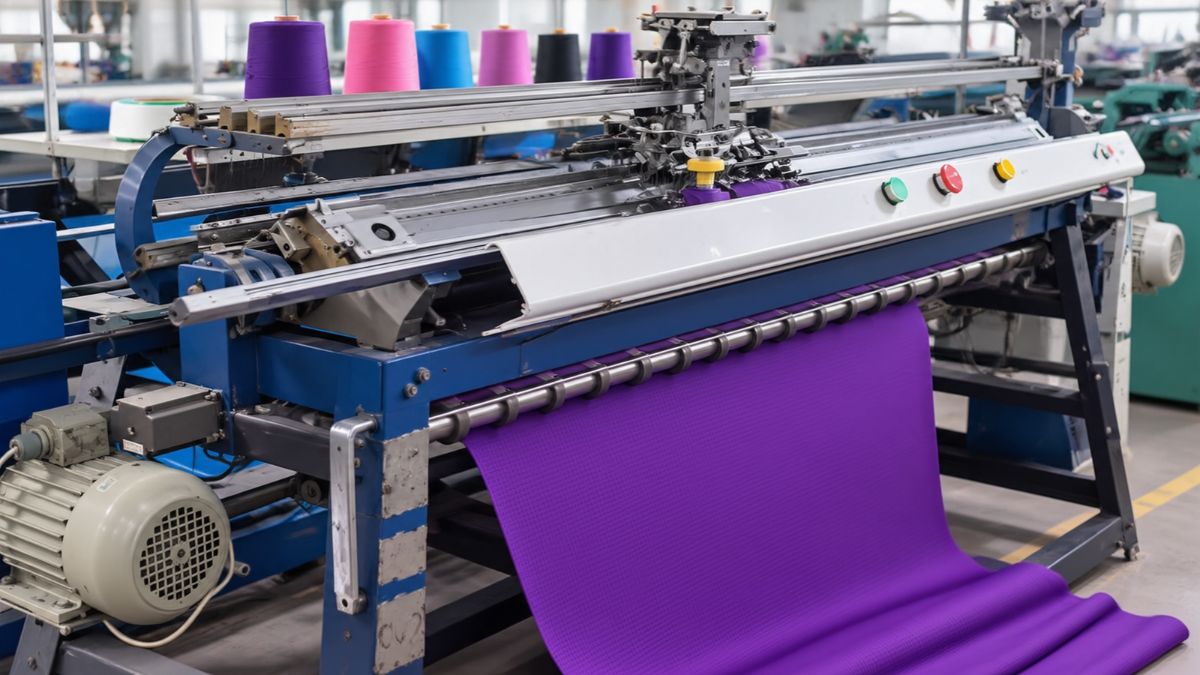
- Most bandage dress cloth is weft-knitted yardage produced on a circular machine; common diameters for this cloth are around 30 or 34 inches, with gauge and feed count matched to the target cloth specification.
- Machine parameters such as 30 inches diameter, 28 gauge, and 90 feeds describe a specific confirmed setup and are stated only when that is the actual machine running the order, not as a default description for all bandage dress fabric.
- Jersey with elastane fed on each system is a frequent construction for women’s bandage dress fabric, but it is not a rule that applies to every order; the construction is confirmed for the specific cloth, not assumed from the category.
- A circular machine knits a tube or slit-open width of cloth; it delivers yardage to the cutting table, not a finished dress.
- The order names circular weft as the path only when that is the machine confirmed to run; using it as a default description for all bandage knit dress production misrepresents orders that use a different route.
Flat Weft and Warp Knitting Named Only When They Are the Real Route
Flat weft and warp knitting are not footnotes to the circular path; they are separate routes with separate control records.
- A flat weft machine can knit shaped panels, trims, or structured pieces and is specified in the order only when that is the confirmed production route; it is not described as a variation of circular knitting.
- Warp knitting remains a viable route for certain elastic bandage dress fabric constructions and is not folded into the circular-machine description; its feed logic, course definition, and tension records differ from weft knitting.
- Feed rate, course length, tension, and stitch records are rewritten for the named machine when the route changes; a control file from a circular setup is not copied to a flat or warp machine and treated as equivalent.
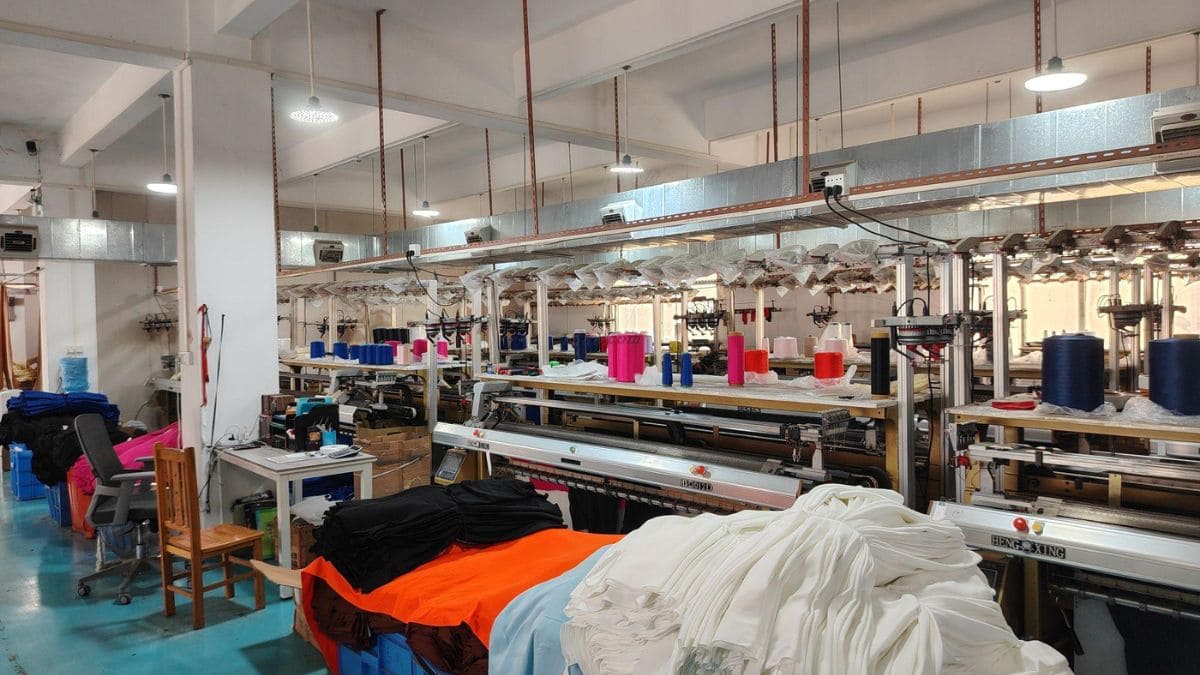
- Fangbei’s confirmed in-house knitting capacity covers its actual machine setup; that capacity is not presented as proof that every product or every order uses one machine class.
- The buyer confirms which path will produce the sample cloth before any control file is compared or any bulk record is accepted as a match.
A Stored Program Does Not Create a Seamless Dress
Computerization improves the accuracy of the knitting record; it does not change what happens after the cloth leaves the machine.
- Computerized fabric machines repeat a cloth program and deliver yardage; that yardage is then slit, cut, and sewn into a dress through separate downstream operations.
- Seamless or whole-garment knitting is a distinct machine class that forms a complete garment shape on the machine; it must be named only when that class is actually confirmed as the production route, not inferred from a smooth cloth surface or a computerized control system.
- A smooth computerized jersey tube coming off a circular machine is not evidence of a dress without seams; the tube still requires slitting, cutting, and sewing before it becomes a garment.
- Band-built dresses—where the structure depends on individually cut and sewn elastic strips—still require cut strips and sewing operations after the cloth is knitted, regardless of how precisely the knitting was controlled.
- No product photo, program name, or machine specification is used to claim seamless construction; that claim requires confirmation of the machine class and the garment-forming method.
Machine Path Against What Computer Control Can Prove
| Applicable path | Usual output | What a stored program can repeat | What computer control does not prove |
|---|---|---|---|
| Circular weft yardage machine | Knitted tube or open-width yardage for cutting | Feed rate, course length, tension, and stitch sequence for that cylinder and gauge | That the cloth is seamless, that the dress requires no sewing, or that the path suits every construction |
| Flat weft machine | Flat panels, shaped pieces, or trims | The stitch sequence and course length for the specific flat-bed setup | That the output matches a circular-machine cloth, or that the control file transfers between paths |
| Warp knitting machine | Warp-knitted elastic fabric in open width | Warp tension, guide-bar movement, and repeat sequence for that machine | That the cloth behaves identically to weft-knitted bandage fabric, or that the same record applies |
| Seamless or whole-garment machine | A shaped garment tube or panel requiring minimal cutting | The garment program for that specific machine model and gauge | That any other machine class produces the same result, or that computerization on a fabric machine implies this output |
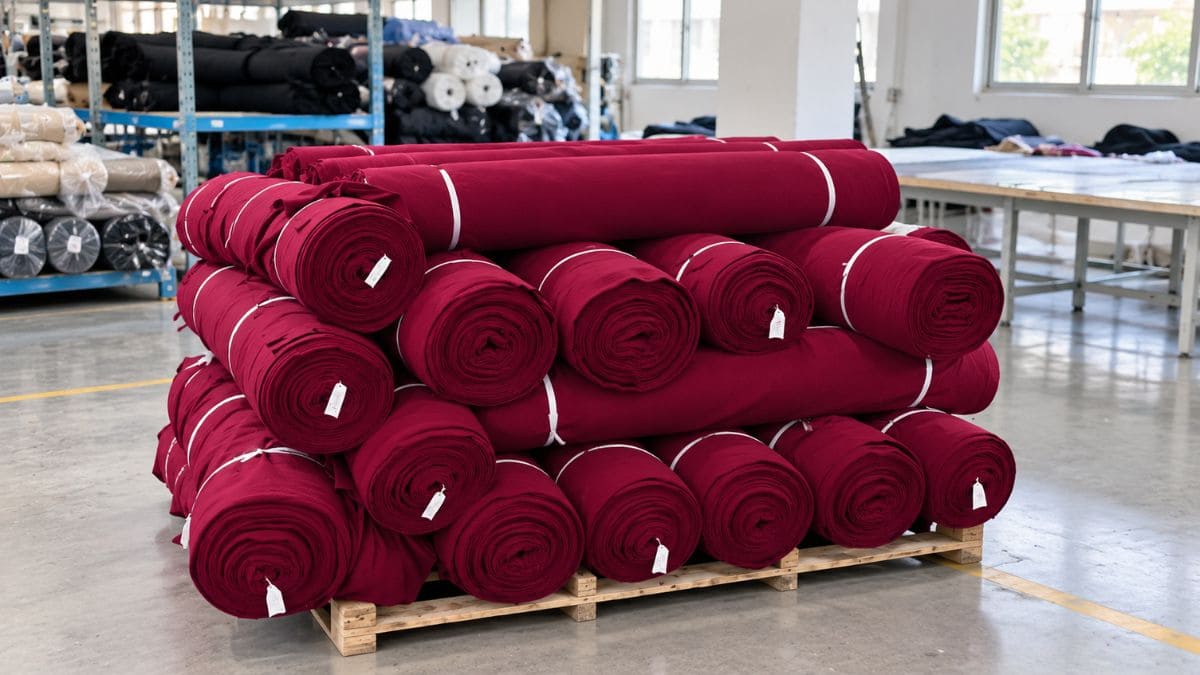
What Machine Records Make the Next Knitting Run Traceable?
A control file and the log attached to an approved cloth answer different questions. The file states what the machine was told to do; the log shows what actually ran when the sample was approved.
Traceable bulk knitting requires both a retrievable program and a written log tying machine identity, program version, yarn lots, and setpoints to the approved roll. A matching file number alone cannot confirm that bulk used the same setup, because operator overrides, yarn-lot changes, and machine differences may not appear in the file.
Before bulk starts, ask the factory to attach the approved-sample log and confirm that the bulk log will use the same fields. This turns file matching into a checkable comparison rather than a general assurance that the machine ran correctly.
The Minimum Log Tied to the Approved Cloth
The log sheet for an approved knitting run covers machine identity, program version, and all four control parameters.
- Machine identity, cylinder diameter, gauge, and feed count are written on the same sheet as the program name and version; without the machine identity, the same file loaded on a different machine is not a confirmed repeat.
- Course-length target, feed settings for both ground yarn and elastane, tension setpoints, machine speed, and take-down tension are included as specific numbers, not as general descriptions.
- Ground-yarn lot number and elastane lot number stay with that sheet because a new lot from the same supplier can change the course length needed to achieve the same cloth weight and stretch.
- Program version number and the date the file was loaded show whether bulk production used the approved file or a later edited version; a date alone without a version number does not distinguish the two.
- Operator initials confirm who loaded and ran the file; this is a traceability entry, not a personnel audit, and it allows a specific question to be directed to the right person if a discrepancy appears.
Where a Manual Card Loses the Settings
A handwritten setup card has specific failure points that a program file avoids.
- A handwritten card often records the ground-yarn feed while omitting the elastane feed rate; the missing value is the one most likely to drift between runs.
- A cam changed mid-run to correct a fault may never be copied back onto the card; the card then describes the start-of-run setup, not the setup that produced the approved cloth.
- Two cards for the same style can carry different course-length targets with no version mark to show which one matches the approved sample; a mechanic matching the look by eye may use either number without knowing which is correct.
- A later mechanic who matches the cloth appearance by eye can still miss the approved tension setpoints; the cloth may look right at the start of the roll and drift before the end.
- What the manual card loses is the setting trail—the sequence of adjustments that led to the approved result—not the identity of the factory or the competence of the operator.
How the Buyer Checks Sample Cloth Against Bulk Cloth
Comparing sample and bulk records is a specific check, not a general quality review.
- The bulk log is compared with the sample log for machine class, program version number, and course-length target; a match on all three is the minimum confirmation that the same setup ran.
- A changed tension setpoint or a different yarn lot is flagged before the roll is accepted as the same cloth; the change may be minor, but it needs a trial result before the bulk roll is approved.
- The comparison uses knitting records only and does not assess the supplier’s legal identity, site certification, or commercial terms; those are separate checks covered elsewhere.
- A matching file version is not accepted if the machine path changed from circular weft yardage to a flat or warp route; the path change means the control record is not comparable even if the file name is the same.
- Fangbei can attach the actual knitting record from its in-house knitting setup when the cloth is produced there, giving the buyer a specific log to compare against the approved sample rather than a general capability statement.
Sample Log and Bulk Log Side by Side
| Record field | Why bulk needs it | How a manual card fails | What a program file adds |
|---|---|---|---|
| Machine identity, diameter, and gauge | Confirms the same machine configuration ran; a different gauge produces different cloth from the same file | Card may note the machine number but omit diameter and gauge | File is stored with machine identity in the system; mismatch is flagged at load time |
| Program name and version | Distinguishes the approved setup from later edits | Card carries a style name but rarely a version number; two cards for the same style look identical | Version number in the file name or header separates approved from trial |
| Course-length target | The single number that ties density, weight, and stretch together across runs | Often absent or noted as a range rather than a specific target | Stored as a setpoint; deviation from target can trigger an alert on equipped machines |
| Feed and tension setpoints | Drift in either changes the cloth without changing its appearance immediately | Ground yarn may be noted; elastane feed and tension setpoints are frequently omitted | Both streams stored as named setpoints; operator override is visible if the file is not updated |
| Yarn and elastane lot | A new lot can require a new course-length trial even at the same setpoints | Lot number rarely appears on a setup card | Not stored in the program file; must be added to the accompanying log sheet manually |
| Date and operator | Shows whether bulk used the approved file or a post-approval edit | Date may appear; operator initials are often absent | File system timestamps the last save; operator login adds accountability without a separate audit |
Why a Stored Stitch Program Is Not a Texture Choice?
Computer control can store a stitch program, but choosing rib, jacquard, or a raised texture remains a separate fabric decision for the buyer.
For texture choices and how they look under stretch, see our dedicated article on textured bandage dresses.
Why Elastane Tension Here Is Only a Machine Setpoint?
Elastane feed tension is a machine setpoint in this article, not an explanation of spandex content, recovery life, or fiber behavior.
For how spandex affects stretch and recovery, see our dedicated article on bandage dress spandex.
Conclusion
A bandage knitting machine repeat is only as reliable as the feed rate, course-length target, tension setpoints, and stitch program saved for the named machine path—circular weft, flat weft, or warp—and computerization alone does not mean seamless construction or a single universal route.
Confirming the machine path and attaching a complete log to the approved cloth are the two steps that make bulk traceability possible.
Fangbei runs in-house knitting and can provide the actual knitting record—machine identity, program version, course-length target, and yarn lots—with the approved sample cloth.
Share your sample cloth specification and target machine path with our production team, or review our manufacturing setup before the knitting brief is confirmed.