
Founders who want to start a bandage dress brand often open a supplier chat before anything is written down, then wonder why samples keep missing the mark.
Without a fixed customer, channel, and style count, a factory is left developing against a moving target instead of a locked brief.
Starting a bandage dress brand follows five written gates in order: positioning, first assortment, supplier nomination, development approval, and listing.
Each gate closes with one specific deliverable, and the next stage only opens once that deliverable exists on paper, not as a verbal plan or a shared mood board.

This sequence decides what a founder owes a supplier before contact, and what a supplier owes back before bulk is ever discussed.
The next section lays out that full stage order before any single gate gets explained in detail.
What Stage Order Should You Follow to Start a Bandage Dress Brand?
Many founders treat brand-building as one continuous conversation with a factory rather than five separate, closeable stages.
That habit is what produces samples built against a reference folder instead of a locked brief, and it is the first thing to correct before any style gets developed.
To start a bandage dress brand, a founder moves through positioning, first assortment, supplier nomination, development approval, and listing, in that exact order.
Each stage has one deliverable that must exist in writing before the next stage opens, and skipping a deliverable to save time usually costs more time later when a sample fails against an undefined brief.
Seeing the full order before any single stage is explained keeps a founder from treating two stages as one conversation.
The table below shows what each stage receives from the one before it and what decision has to be made before the next stage can begin.
Five-Stage Order from Positioning to the First Sale
- A written positioning note has to be finished before any style is developed, so later samples get judged against a named customer and occasion rather than a general mood board.
- A short first assortment has to be frozen before supplier outreach begins, so a factory is never asked to quote an open-ended wardrobe with no fixed style count.
- One supplier has to be nominated before development files are expanded, so a single party owns the next sample path instead of several factories chasing the same brief.
- Development approval is a written pass, revise, or stop decision, and listing only starts after a pass; a sample that is merely "liked" is not an approval.
- A failed gate sends the founder back to the previous deliverable, such as a weak line list or an unclear positioning note, instead of skipping ahead to photography, ads, or a launch date.
Deliverables and Decision Gates That Connect the Stages
This table shows the handoff at each stage and names the specialist article that owns the method behind it.
| Stage | Input Required from the Previous Stage | Deliverable That Closes This Stage | Decision That Opens the Next Stage | Method This Overview Does Not Teach |
|---|---|---|---|---|
| Positioning | None; this is the starting point | A one-page positioning note naming customer, occasion, channel, and price band | Note is finished and can be cited by later stages | Brand versus outlet-buying comparison (separate article) |
| First assortment | Locked positioning note | A line list with style count, color references, and size range | Line list is stable enough for supplier contact | Tech-pack page structure (separate article) |
| Supplier nomination | Stable line list | One named supplier who accepts the line list in writing | Supplier confirms the brief and development can start | Factory credential verification (separate article) |
| Development approval | Accepted brief with the nominated supplier | A written proceed, revise, or stop decision on the sample | Pass decision opens bulk release | Sampling review workflow and MOQ math (separate articles) |
| Listing and first sale | Bulk release decision | A live product page with approved images, sizes, and price | Page accepts orders | Retail pricing formula (separate article) |
A founder can use this table to check which deliverable is still missing before assuming a stage is finished.
Signs the Current Stage Is Still Open
- A mood board with no named customer, occasion, or channel is not a finished positioning note, no matter how consistent the visual references look.
- A folder of reference images with no stated style count or style role is not a first assortment; a supplier cannot quote a folder.
- A list of factory names without one nominated partner is not a supplier decision, since nobody yet owns the next sample path.
- Sample comments still scattered across chat messages, voice notes, or group threads are not development approval until they are collected into one written decision.
- A product page drafted before approved images, size information, and a set price exist is not ready to accept orders, even if the listing looks complete.
Closing each of these gaps is what separates a finished stage from one that only looks finished; the next section defines the first two deliverables in detail.
How Do Positioning and the First Assortment Decide the Next Step?
A positioning note and a first assortment often get written as inspiration documents rather than working briefs a supplier can actually respond to.
That gap is usually what causes a factory to ask open-ended questions instead of quoting a clear scope.
Positioning fixes the customer, occasion, channel, and price band on one page, and the first assortment fixes a short, scoped style list a supplier can quote against.
Together these two deliverables form the line list, and supplier contact should wait until that line list is stable rather than still accepting new reference images.
Treating positioning and assortment as two parts of one gate, rather than two separate conversations, is what keeps the line list from drifting after outreach starts.
The next breakdown separates the written choices that belong in positioning from the scope limits that belong in the first assortment.

Written Positioning Choices That Come Before Any Design File
- Name the customer and the occasion the first season serves, without trying to build a full occasion-by-occasion collection plan at this stage.
- Name the first sales channel, such as an own site, a marketplace, or wholesale, because the channel changes what "ready to sell" actually means later.
- Record the intended price band as a positioning choice only, and leave markup, margin, and channel fees uncalculated until the pricing stage.
- Write down what the brand will not make in the first year, so development does not absorb every reference image a founder has saved.
- Stop this stage once those four statements fit on one page that later stages, including the supplier brief, can cite directly.
Scope Limits for the First Bandage Dress Assortment
- Limit drop one to a stated style count that can realistically share one development path with the same supplier and timeline.
- Give each style one role, such as core body, color variation, or single test, without building a replenishment or reorder system at this stage.
- Decide whether drop one is dresses only or also includes a set, and stop at that scope choice rather than expanding mid-development.
- List colors as named references for later sample approval, not as a dye plan, a trend forecast, or a color-fastness commitment.
- State the size range the first order intends to cover, without writing the grading rules or measurement method behind that range.
Line-List Fields That Clear the Supplier-Contact Gate
Use this table to check whether the line list is complete enough to send to a supplier.
| Line-List Field | What the Founder Must Write | Pass Condition | Left Unresolved on Purpose |
|---|---|---|---|
| Customer and occasion | One sentence naming who wears it and when | Matches the positioning note exactly | Full customer persona research |
| Sales channel | Own site, marketplace, or wholesale | Named and not left as "TBD" | Platform-specific listing rules |
| Style count and role of each style | A numbered list with one role per style | Supplier can quote each line | Full tech-pack pages per style |
| Color references | Named reference colors, not a palette theory | Each color has at least one visual reference | Dye matching and color-fastness testing |
| Intended size range | A stated range, such as S–XL | Range matches the target channel | Grading rules between sizes |
| Explicit year-one exclusions | A short list of what will not be made | Keeps the supplier brief from expanding | A full multi-season roadmap |
A line list that passes every row above is ready for the next stage, where the founder brings it to a supplier conversation rather than a shopping list of factories.
What Must Be True Before You Name a Bandage Dress Supplier?
Founders who want to start a bandage dress brand sometimes contact a dozen factories with the same unfinished line list, then struggle to compare answers that were never responding to the same brief.
Supplier choice at this stage is narrower than a full factory audit; it only asks what must be true before development can begin.
Naming a bandage dress supplier at this stage means accepting one nominated factory for the first sample path, based on the locked line list and a written acceptance of that brief.
It does not yet require a factory audit, a reviewed evidence file, or a signed production contract, since those steps belong to a separate credential-verification process.
Confirming who owns design direction and who approves later changes is the condition that keeps development from stalling once a style is in progress.
The next three sections separate the inputs a founder brings, the nomination decision itself, and the quantity and branding details that only need to be recorded, not resolved, at this point.
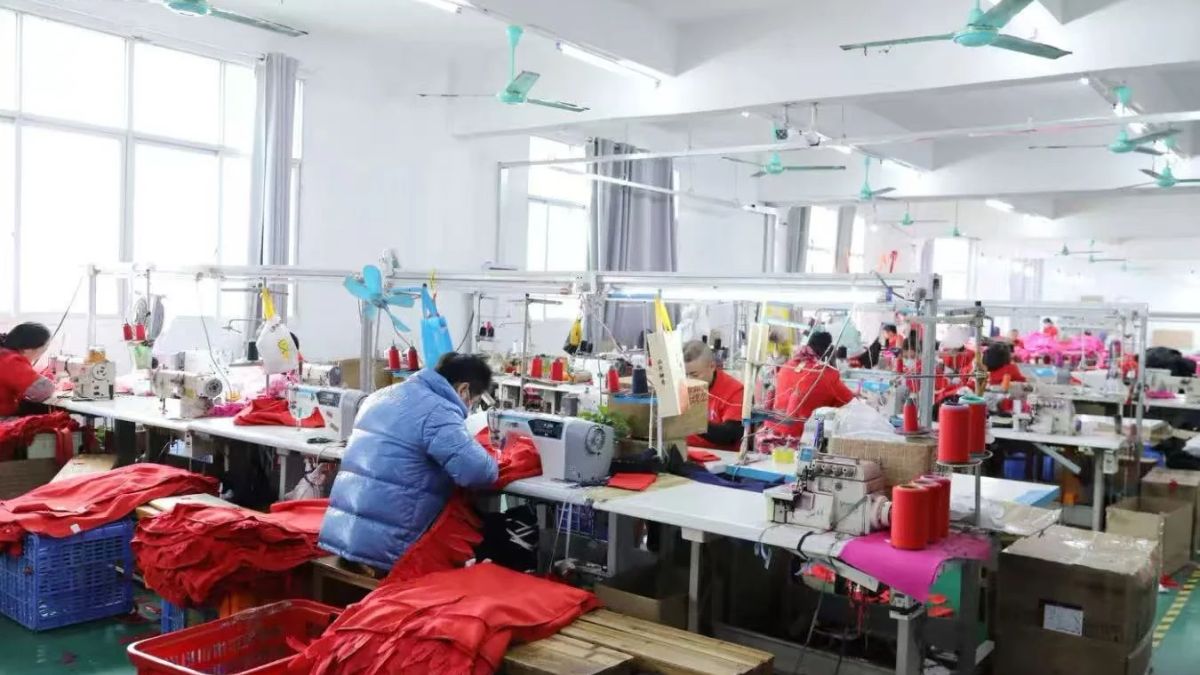
Inputs the Founder Brings to the First Supplier Conversation
- Bring the locked positioning note and the completed line list, not a loose folder of screenshots or a running group chat of ideas.
- State whether each first style starts from the founder’s original design or from a supplier base style, as a path choice only, not a full OEM-versus-ODM comparison.
- State the target selling season so the supplier can say whether that season is realistic, without asking the supplier to build a full backward production calendar yet.
- Confirm that the reference is bandage apparel the founder actually intends to sell, and resolve any category doubts before a single sample is requested.
- Do not open development files, such as pattern or color standards, until these inputs are accepted by the supplier as the working conversation brief.
A Written Supplier Nomination Without a Factory Audit
- Reduce outreach to one nominated supplier for the first sample path once the line list is stable enough that it will not change mid-conversation.
- Record in one sentence who provides the design direction and who holds approval authority over later changes, so nobody assumes the other party decides.
- Note whether that supplier will make the goods directly or coordinate outside work, without yet collecting the full evidence file behind that claim.
- Stop further supplier shopping once nomination happens, unless that party cannot accept the line list as written.
- Treat machine counts, factory videos, and trade-show impressions as clues worth revisiting later, not as a pass at the nomination stage itself.
Quantity and Branding Inputs Recorded Only as Handoffs
- Record intended units by style, color, and size as the input a later quantity discussion will need, without resolving that math here.
- Do not calculate order cash exposure, size-split scenarios, or reorder rules in this blueprint; those belong to a dedicated MOQ and cash-planning process.
- Mark branded labels and a hangtag as required or not required on the first bulk, as a simple yes-or-no decision for now.
- Leave label material, placement, artwork, and bag specs unwritten at this gate; a private label bandage dress program defines those details separately.
- Enter development only after the nominated bandage dress supplier has accepted these inputs in writing, not after an informal verbal agreement.
A supplier who accepts these inputs in writing is ready to receive a development brief; what that supplier must approve next decides whether the brand can actually launch.
Which Approvals Must Pass Before the First Bandage Dress Goes on Sale?
A sample that looks finished is not the same as a sample that has passed a written approval, and founders who skip that distinction often list goods before the brand is actually ready to sell.
This stage sequences the remaining approvals without teaching the file pages, sample logistics, or pricing math behind each one.
Before a first custom bandage dress goes on sale, five approval points have to pass in order: frozen design direction, an evaluable development file, a sample decision, brand-identification intent, and bulk release.
Each approval creates one handoff to the next point, and listing can only open once bulk release has actually been confirmed in writing.
Knowing which approval unlocks the next one keeps a founder from listing a product page before the bulk standard it describes actually exists.
The table below places these approvals in order before the sample decision and listing conditions are explained individually.
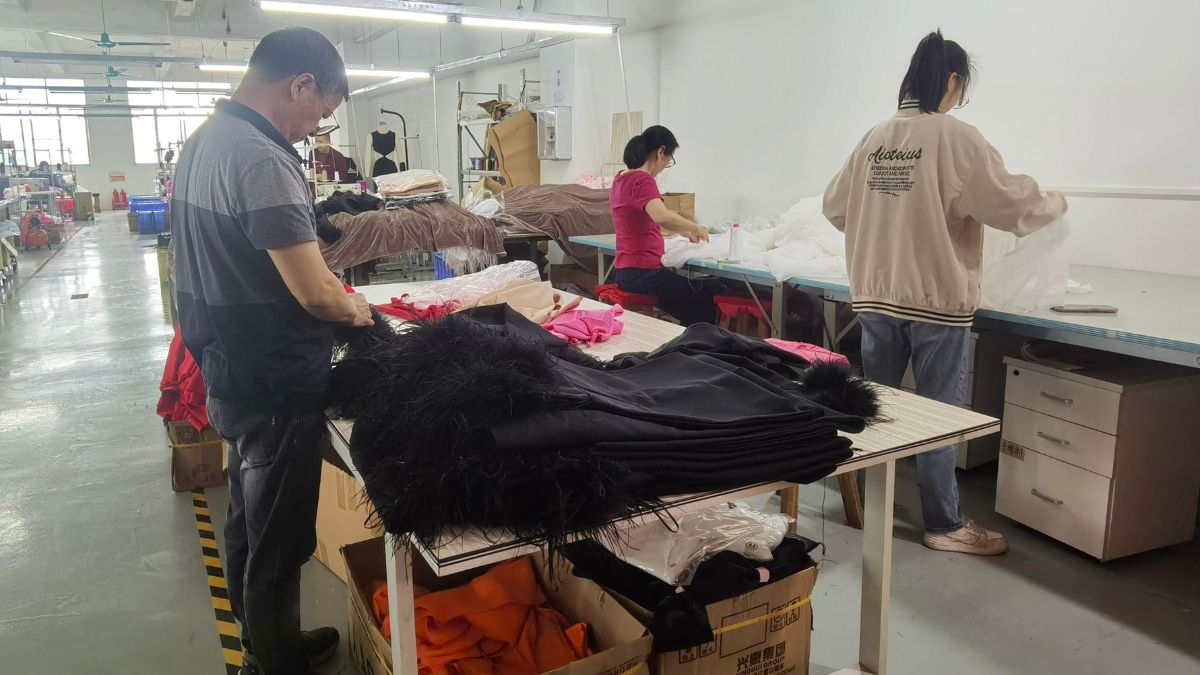
Approval Points from a Frozen Design Direction to Bulk Release
| Approval Point | Key Input | Written Pass | Next Step | Specialist Method Not Taught Here |
|---|---|---|---|---|
| Frozen design direction | Accepted line list and supplier brief | Design references stop changing | Development file can be built | Tech-pack page structure |
| Evaluable development file | Frozen design direction | File is complete enough to sample against | Sample making can start | Full tech-pack content and version control |
| Sample decision | Physical sample against the file | Written proceed, revise, or stop | Proceed opens bulk discussion | Sampling fees, reviewers, revision rounds |
| Brand-identification intent | Proceed decision on the sample | Branding required or not required, stated in writing | Label and tag specs can be scoped | Label materials, placement, and artwork |
| Bulk release for listing | Confirmed branding intent and bulk terms | Written bulk-release confirmation | Listing can open | Retail price calculation |
This order shows that a passed approval only opens the next conversation; it does not yet resolve the detail work inside that conversation.
A Single Written Sample Decision to Proceed, Revise, or Stop
- Collect every sample comment, from fit notes to color remarks, into one consolidated decision: proceed, revise, or stop.
- A proceed decision names the exact sample version that later bulk production is expected to follow, so there is no ambiguity about which sample was approved.
- A revise decision names the specific change needed and returns to the same approval point, without mapping out fees, couriers, or pre-production steps here.
- A stop decision ends that style before labels, freight, or photography are ever ordered against it, which protects the founder from sunk costs on a rejected style.
- A fit comment that actually needs a new size rule should be routed to the sizing and grading work, rather than solved inside this blueprint.
Listing Conditions That Must Be True Before Orders Open
- Use images of the approved sample or the approved bulk standard only; the shot plan and styling choices behind those images are left unwritten here.
- Publish size information taken directly from the approved size record, without this blueprint teaching the garment-measurement method behind that record.
- Confirm a retail price has already been set before the page can accept orders, even if the final pricing formula was worked out in a separate process.
- Confirm care wording and label content are approved for the intended sales market, without this blueprint writing the actual care rules.
- Open ordering only after the bulk-release decision has been made, so sales are never built on a sample that was never formally approved.
Where Supplier Nomination Ends and Factory Verification Begins
Supplier nomination in this blueprint only records who will develop the first styles; identity, site, in-house scope, and contract evidence are verified in a separate factory-credential review.
For a detailed factory-credential review, see our dedicated article on how to verify manufacturer credentials.
Why the Launch Gate Does Not Include a Pricing Formula
This blueprint only requires a price band and a finished price before launch; markup, margin, discounts, and channel fees belong in the retail pricing guide.
For a detailed pricing method, see our dedicated article on pricing custom bandage dresses for retail.
Conclusion
Starting a bandage dress brand requires clear positioning, a focused first assortment, and documented development approvals.
Each stage should produce a usable deliverable before the next begins.
Fangbei can review your initial development brief.
Review our garment manufacturing background or discuss your positioning note and first style list with our production team before moving into sample development.