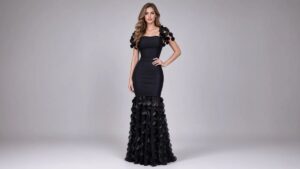
Sending a factory a reference photo and expecting a production-ready sample is one of the most common and costly mistakes a bandage dress designer makes.
Without a written spec, the mill fills every gap with its own defaults — the wrong yarn blend, a light-duty zipper, a stitch density that will not hold under bandage tension.
A factory-ready custom bandage dress tech pack closes those gaps before sampling begins.
A tech pack, or technical package, is a structured document containing all specifications, measurements, materials, and construction details required to produce a garment accurately, typically used in custom bandage dress and OEM apparel production contexts.
For a bandage knit dress, it must include a cover sheet, technical flats with numbered callouts, a written yarn-and-GSM spec, a trim and hardware BOM, stitch and seam notes, and a graded size-chart page.
Before sending any pack to a factory, verify that every component listed in the BOM appears in the flats, and request a lab dip or yarn-dye strike-off before bulk knitting begins.
The sections below build each page of that document in the order a sample room will use it.
What Must a Custom Bandage Dress Tech Pack Include Before Sampling?
A custom bandage dress tech pack must give the sample room every decision it would otherwise make by default.
Because bandage tension turns missing specifications into fit failures, the pack must lock structure, materials, construction, and measurements before the first sample is cut.
A complete custom bandage dress tech pack must include six pages before a mill will cut a first sample: cover sheet, technical flats, fabric and yarn spec, trim BOM, stitch and seam notes, and a size-chart page.
Each page answers a specific factory question in advance. Before submission, confirm that every BOM component appears in the flats and every construction callout has a matching stitch specification.
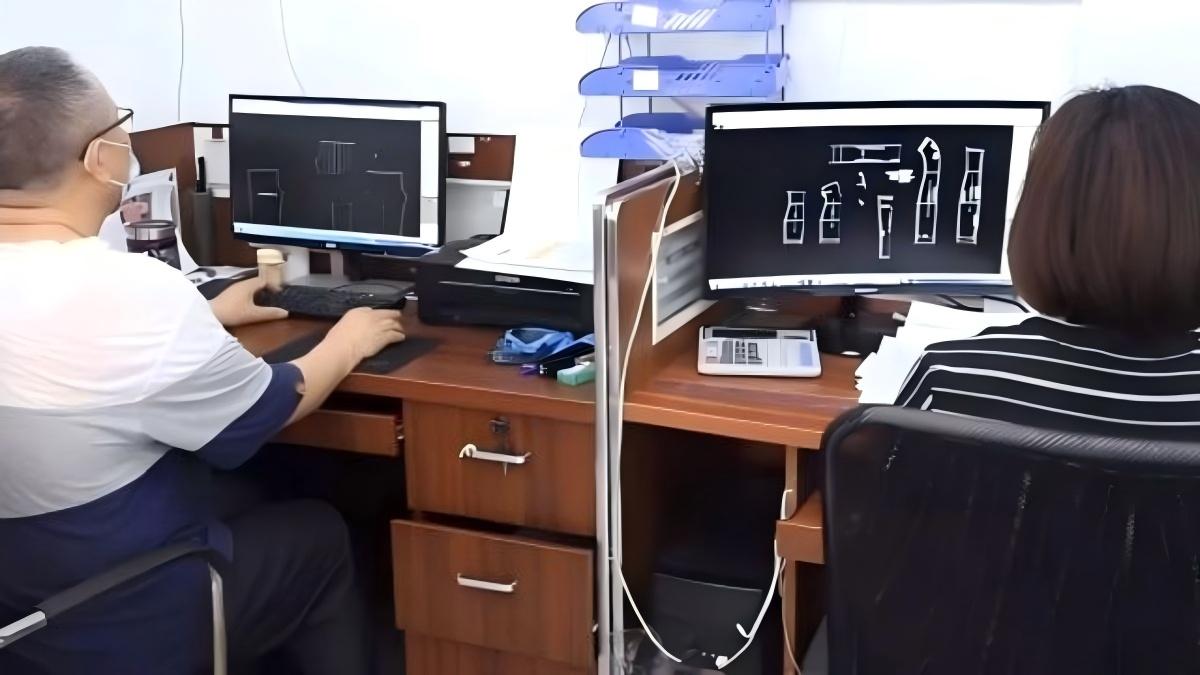
With those six pages defined, the first task is to understand why a reference photo alone cannot replace a written production document.
Why a Sketch or Reference Photo Is Not a Tech Pack
A mood board or reference image is a starting point, not a production document.
- A mood board does not state yarn percentages, finished GSM, zipper gauge, or any point of measure, so the mill cannot quote accurately or cut a first sample from it — it can only approximate.
- Bandage tension turns missing specs into fit failures, not just a wrong shade on the hanger; an unspecified yarn blend or stitch density will produce a dress that either cannot be put on or loses its sculpting hold after one wear.
- Factories sample from written pages; a custom bandage dress tech pack is the contract for that sample — what is not written is not agreed, and the factory’s default will stand.
- Send one dated pack per style, not a folder of unmarked screenshots; version control prevents the sample room from cutting from a superseded reference.
Cover-Sheet Fields Every Factory Needs on Page One
The cover sheet is the factory’s orientation document — it must answer who, what, and when before the sample room opens the next page.
- Style number, style name, season, and pack date are non-negotiable fields; without them, revisions mix and the sample room cannot confirm which version it is working from.
- State the sample size code and the full size run you want graded after approval so the factory can plan marker efficiency and grading rules from day one.
- Include a designer or brand contact name and a single front thumbnail of the intended silhouette — the thumbnail is a visual anchor, not a substitute for the technical flats on the following page.
- Add a one-line construction path callout — for example, "wrapped band construction" or "paneled knit with horizontal seam lines" — so the sample room knows the structural logic before it reads the flats.
Technical Flats and Numbered Construction Callouts
Technical flats are the factory’s assembly drawing — they must be drawn as a knit bandage dress, not traced from a woven sheath or a fashion illustration.
- Provide front, back, and side or three-quarter flats; a bandage knit dress has a different silhouette in profile than a woven garment, and the side view resolves strap, panel, and seam placement questions that the front view cannot.
- Number every callout on the flat and match those numbers to BOM line IDs for seams, zipper, straps, and panels — a callout without a BOM match is an instruction the factory cannot source against.
- Include a seam and panel map so the sample room does not guess where bands or joins sit; for a wrapped-band construction, the map shows band direction, overlap sequence, and join points.
- Add zoom bubbles only where the mill could misread the sketch — neckline finish, hem treatment, strap attachment, and zipper top are the four areas where a missing close-up most often produces a wrong first sample.
Stitch and Seam Specs Written as Sample Targets
Stitch specs are not a sewing tutorial — they are measurable targets the sample must hit before it ships.
- Name stitch types as specifications: four-thread overlock for seam joining and edge finishing, coverstitch for hems and strap edges where the seam must remain flat and elastic, chain stitch where additional stretch remainder is needed at a high-tension join.
- Write stitch density as 12–15 SPI so the sample can be checked with a ruler, not as a general instruction to sew carefully; this range balances seam strength with needle-hole risk on elastic knit.
- List the critical seams the sample must hold under tension — side seam, hip circumference, neckline or strap join — and note that these seams will be pull-tested during sample review.
- State what the approved sample must match; do not write how to operate the machines — the factory’s operators know their equipment; they need the target, not the method.
Factory-Ready Page Order
The table below shows the six pages a mill expects before it will cut a custom bandage dress sample, what each page must contain, and how the factory uses it.
| Tech Pack Page | Required Fields | Factory Uses It To |
|---|---|---|
| Cover / style sheet | Style number, name, season, pack date, sample size, size run, contact, front thumbnail, construction path | Orient the sample room; confirm version before cutting |
| Technical flats and callouts | Front, back, side flats; numbered callouts matching BOM IDs; seam and panel map; zoom bubbles at critical details | Understand assembly sequence and structural logic |
| Fabric and yarn spec | Fiber percentages totaling 100, finished GSM, fabric width, recovery target, color code or Pantone | Source or confirm the correct knit before cutting |
| Trim and hardware BOM | Zipper gauge and length, hook-and-eye spec, elastic width, cups or gripper if required, label placement | Source all components before the sample is cut |
| Size-chart page | POM names, sample-size column, graded columns, tolerances | Cut the sample to the correct dimensions and grade bulk |
| Construction and stitch notes | Stitch types by seam, SPI target (12–15), critical seam list, approved-sample match requirement | Sew to spec and verify the sample before shipping |
Every row in this table that is missing from the submitted pack becomes a factory question — or a factory assumption — that delays or degrades the first sample.
Once the document structure is confirmed, the fabric and yarn page is where the most consequential spec decisions are made.
How Do You Write Yarn Blend and Fabric Specs for a Custom Bandage Dress?
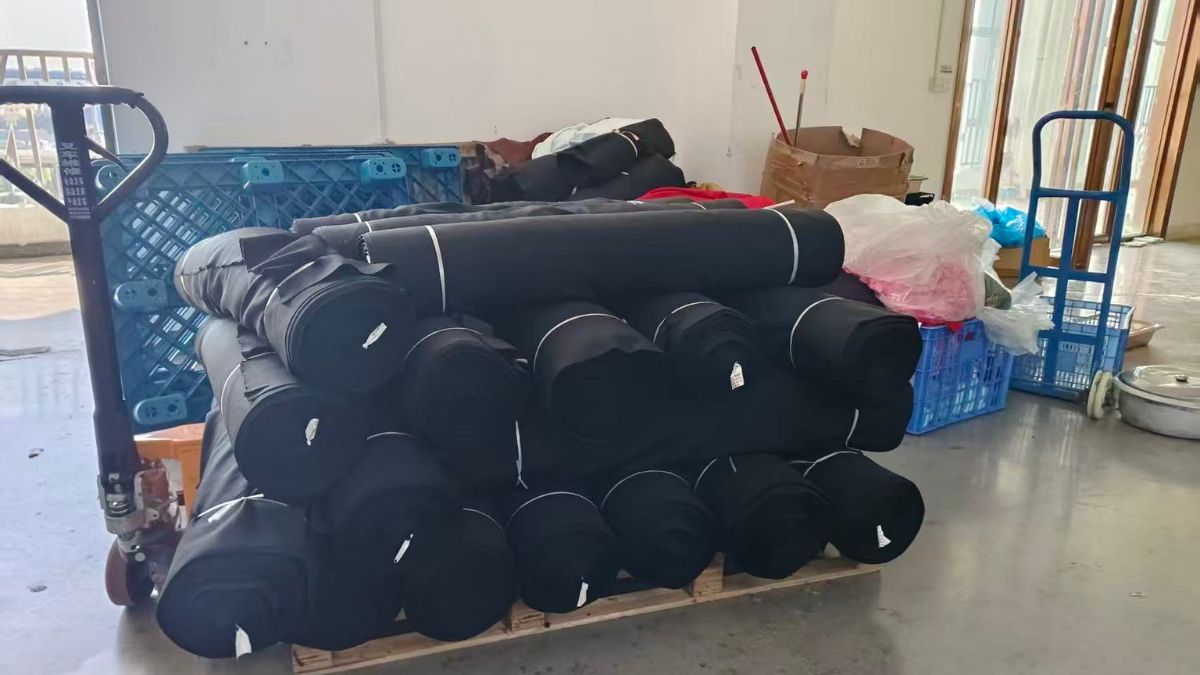
The fabric page converts a design intention into numbers a knitting mill can source and verify.
Yarn percentages, finished GSM, width, recovery, and color code determine whether the finished bandage dress has soft drape or sculpted hold.
The yarn blend, finished GSM, fabric width, recovery target, and color code must all appear as specific numbers on the fabric spec page.
They should not be written as descriptions, brand references, or requests to match a photo. A rayon-led blend and a polyester-led blend produce different hand-feel and recovery results, so the designer must choose one direction before sampling.
Request a lab dip or yarn-dye strike-off before bulk knitting begins.
Once the fabric direction is set, each field on this page can be written as a measurable mill ticket.
Yarn Blend as Percentages That Add to 100
The yarn blend field is a math problem with one correct answer: the percentages must total 100.
- Write each fiber and its percentage as a spec line — "rayon bandage dress" on a hangtag is a consumer label, not a mill instruction; the factory needs "75% Viscose / 15% Nylon / 10% Spandex" to source and knit the correct yarn.
- Viscose/rayon-led blends produce a softer, more draped hand-feel; polyester-led blends produce a more sculpted, structured hold — choose one direction and write it on the pack, because the mill cannot split the difference.
- Spandex percentage is a spec field on this page, typically in the range of 6–10% for commercial bandage knits; it directly controls elastic recovery and sculpting strength, so it must be a number, not a range or a preference.
- If the percentages do not total 100, the mill will fill the gap with whatever fiber is on the cone — the result will not match the intended hand-feel or recovery performance.
Finished GSM, Width, and Recovery as Ticket Fields
Three numbers — GSM, width, and recovery — define the physical cloth the sample must be cut from.
- Spec finished GSM after heat-setting, not greige weight; for commercial bandage knits, finished GSM typically falls in the 350–360 gsm range, and this is the number the lab can verify on a received fabric swatch.
- Add fabric width in centimeters so the factory’s marker planner can calculate yield and confirm that the roll width supports the pattern pieces without waste or seam placement compromise.
- Add a recovery target as a testable number — for example, elastic recovery rate ≥90% after a five-minute hold — so the sample review has a pass/fail criterion, not a subjective judgment.
- Do not explain why GSM affects FOB cost on this page; the fabric spec page only locks the cloth the sample must be cut from — pricing belongs in the quote conversation, not the tech pack.
Color Code and Lab-Dip Approval on the Fabric Page
Color is a spec, not a description — write it as a code the dye house can match against.
- Write a Pantone number or mill color code next to each colorway; a color word alone — "dusty rose," "cobalt," "nude" — will produce a different result from every dye house that reads it.
- Require a lab dip or yarn-dye strike-off before bulk yarn is knitted; this step catches color drift before it is locked into hundreds of meters of knitted fabric.
- If the style uses a running mill shade rather than a custom color, write the mill shade name and lot code so the colorway can be reordered consistently across future bulk orders.
- Do not write dye-vat minimums or dye-lot pricing on this page; those belong in a separate dyeing discussion, not in the fabric spec block of the tech pack.
Yarn-and-Fabric Spec Card
The table below gives designers real bandage knit tickets they can copy directly onto a custom bandage dress tech pack instead of using a fabric nickname.
| Blend Route | Fiber Percentages | Typical Finished GSM | Typical Width | What to Write on the Tech Pack |
|---|---|---|---|---|
| Viscose / nylon / spandex (soft wrap) | 75% Viscose / 15% Nylon / 10% Spandex | 360 gsm | 155 cm | Write all three fibers and percentages; specify 360 gsm finished, 155 cm width, recovery ≥90% |
| Polyester / viscose / nylon / spandex (sculpted hold) | 68% Polyester / 10% Viscose / 16% Nylon / 6% Spandex | 350 gsm | 150–155 cm | Write all four fibers and percentages; specify 350 gsm finished; note sculpted-hold intent |
| Higher-spandex sculpting knit | Viscose or polyester base + spandex up to 10% | 350–360 gsm | 150–155 cm | Write spandex % explicitly; note recovery target ≥90%; confirm fiber total equals 100% |
| Unspecified "stretch knit" (fail example) | Not stated | Not stated | Not stated | Mill fills all gaps with defaults; sample will not match intended hand-feel or recovery |
The bottom row is not a spec — it is what happens when the fabric page is left blank.
With the fabric page locked, the trim and hardware BOM is the next page the sample room needs before it can source components and begin cutting.
How Do You Spec Trims and Hardware on a Custom Bandage Dress Tech Pack?
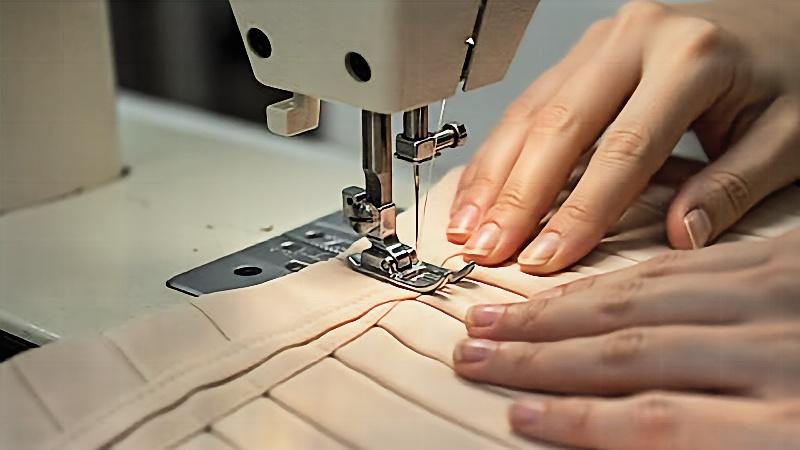
Trim failures on a bandage dress are not cosmetic — a light-duty zipper will split under bandage tension, a missing silicone gripper will let a strapless style slide, and an unspecified hook-and-eye will arrive in the wrong finish and size.
The trim and hardware BOM must be written tightly enough that the sample room can source every component without asking a clarifying question.
Every trim line on a custom bandage dress tech pack must include the component name, a measurable spec, a placement callout, and a quantity per garment.
These four fields let the sample room source every component before cutting.
Check each BOM line against the technical flats before submission; a mismatch between the BOM and the flats will create a factory question and delay the sample.
The following trim categories show how to turn common bandage dress components into complete, sourceable specifications.
Zipper Lines That a Sample Room Can Buy Against
A zipper spec is not "zipper" — it is a set of measurable fields the sample room can source from.
- Write gauge, length in centimeters, color code, closed-end versus separating, and brand or approved equivalent — for example, "YKK #5 nylon coil, 55 cm, closed-end, color to match fabric code" — so the sourcing team has a complete purchase spec.
- Call out placement as a standard abbreviation: CF (center front), CB (center back), or side seam; state whether the zipper is exposed or concealed so the sample room knows whether to plan a zipper guard or a lapped application.
- Bandage tension will blow a light dress zipper; the tech pack must name a heavy-duty unit by gauge and brand or equivalent — writing "zipper" alone is not a spec and will produce whatever the factory has in stock.
- Match zipper tape color to the fabric color code on the same line; if this field is left blank, the sample will arrive with a contrast tape by default, and the correction costs a revision cycle.
Hook-and-Eye, Elastic, Cups, and Gripper as Named BOM Lines
Each of these components is a separate BOM row with its own spec — they are not footnotes.
- Spec hook-and-eye size (for example, size 3 or size 4), finish (rust-proof, nickel-free if required by the destination market), and color at the zipper head; a missing finish spec will produce a plated metal that may not meet import requirements.
- Write elastic width in millimeters, stretch percentage if specified, and the exact placement — bra-line stay, waist stay, or strap — so the sample room does not position it by judgment.
- If the style requires molded cups or foam, write shape (contour or flat), thickness in millimeters, and size relative to the sample size; a missing cup spec is one of the most common reasons a strapless bandage sample fails the bust-support review.
- For strapless or off-shoulder styles, spec silicone gripper width in millimeters and stitch-in placement — for example, "8 mm silicone gripper, stitch-in at inner top edge, full circumference" — so the mill does not skip it or substitute a narrower strip.
Labels as BOM Lines, Not a Branding Project
Labels belong on the BOM as placement and attachment specs — the print files and care copy are separate documents.
- List main label, care label, and hangtag as separate BOM rows; each row needs a size or format field and a stitch or attach point — for example, "woven main label, 50 × 20 mm, sewn at CB neck seam."
- Write placement only on this page: neck center back, left side seam, or hangtag through zipper pull; do not write print files, care copy, or brand guidelines in the tech pack BOM — those are separate deliverables.
- If the first sample can ship without branded trim, mark those rows as "sample: mill generic / bulk: brand-supplied" so the factory does not hold the sample waiting for branded labels that have not been produced yet.
- Keep polybag and carton specifications out of this BOM unless they directly affect the sample; packaging is a separate document and does not belong in the garment-level trim list.
Trim and Hardware BOM Card
The table below shows a complete accessory block a mill can source from, so a custom bandage dress sample is not held for missing trim detail.
| Component | Spec to Write | Placement Callout | Qty per Garment |
|---|---|---|---|
| Main zipper | Gauge, length (cm), closed/separating, brand or equiv., color code | CF / CB / side seam; exposed or concealed | 1 |
| Hook and eye | Size, finish (rust-proof / nickel-free), color | At zipper head, top closure | 1 set |
| Stay elastic | Width (mm), stretch %, material | Bra-line / waist stay / strap | Per placement |
| Molded cups or foam | Shape, thickness (mm), size vs. sample size | Inside bust, left and right | 1 pair |
| Silicone gripper | Width (mm), stitch-in or adhesive | Inner top edge, full circumference | 1 strip |
| Main label (line item only) | Size / format, woven or printed | CB neck seam | 1 |
A BOM with all six rows completed gives the sample room a sourcing list it can act on the same day the pack arrives.
Size Chart Page of a Custom Bandage Dress Tech Pack
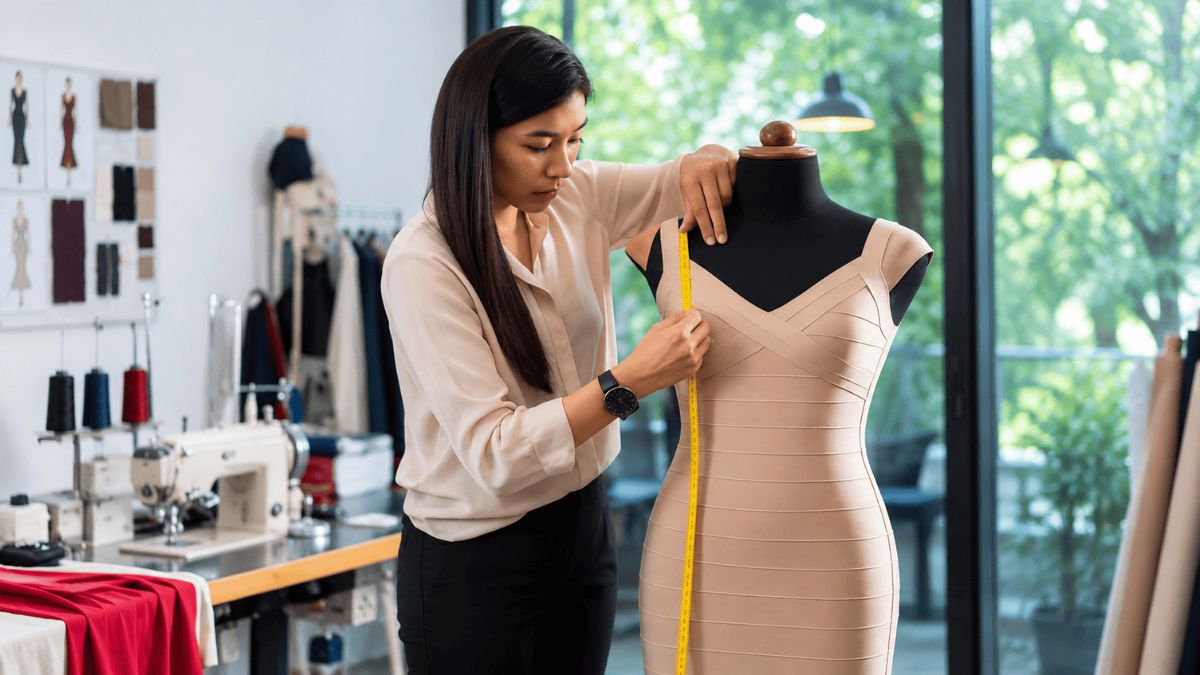
Every custom bandage dress tech pack needs a graded size-chart page with POM names, a sample-size column, and tolerances; how to set those high-stretch numbers is a separate method.
For a detailed high-stretch size-chart and POM guide, see our dedicated article on mastering bandage dress sizing.
Conclusion
A factory-ready custom bandage dress tech pack is not a sketch — it is a cover sheet, technical flats with numbered callouts, a written yarn-and-GSM ticket, a complete trim BOM, stitch and seam targets, and a graded size-chart page.
Each page removes a question the factory would otherwise answer with a default, and defaults on a high quality bandage dress produce samples that miss fit, fabric, or hardware requirements.
Fangbei provides a blank tech-pack template calibrated to bandage knit production, or can review a completed pack before sampling begins.
Send your design to our production team or explore our custom bandage dress capabilities to get your first sample cut to spec.